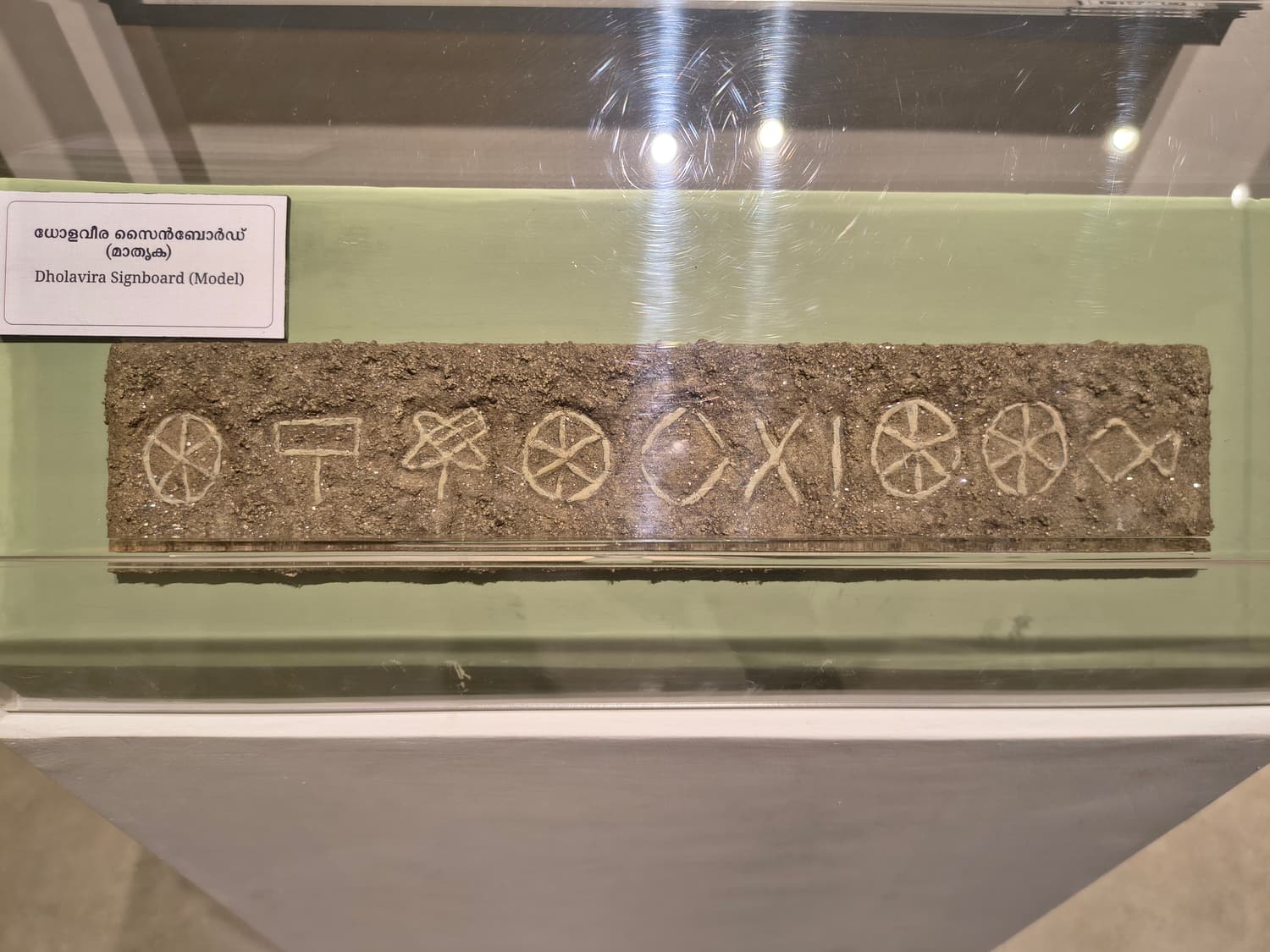
In the early 1990s, in a side room of the castle’s North Gate, archaeologists working under R. S. Bisht uncovered a row of ten large signs lying face down on the floor. Each was about 37 cm high and made of pieces of white gypsum, originally inlaid in a wooden board some three metres long. The wood had rotted away; the signs had kept their arrangement. They are in the Indus script — the writing system of the Harappan civilisation, which nobody has yet managed to read.
Most Indus inscriptions are tiny, a handful of signs on a seal you can hide in your palm. This one was made to be seen from a distance, almost certainly mounted above the gate. That is why it is popularly called the Dholavira signboard, and sometimes the oldest signboard in the world. One sign, a circle with spokes like a wheel, appears four times. What it said — the name of the city, a ruler, a god, a welcome — is anyone’s guess.
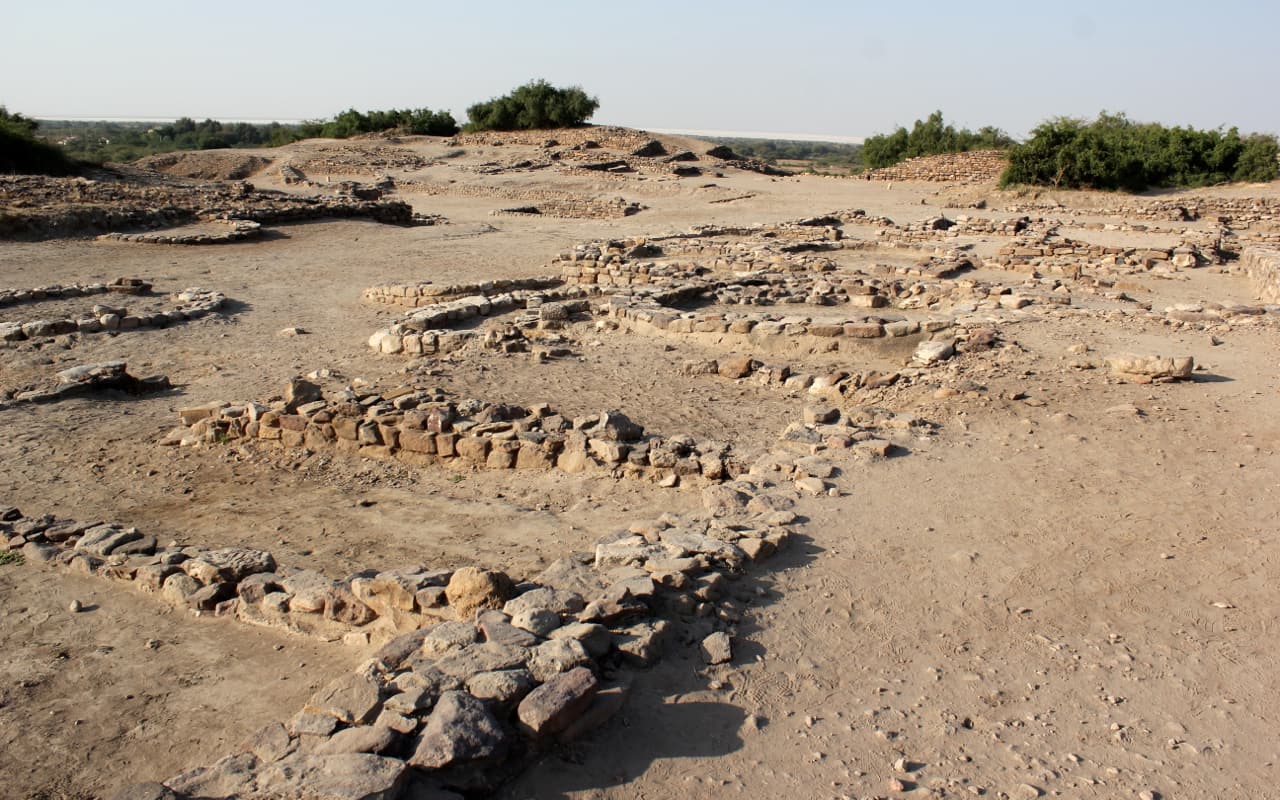
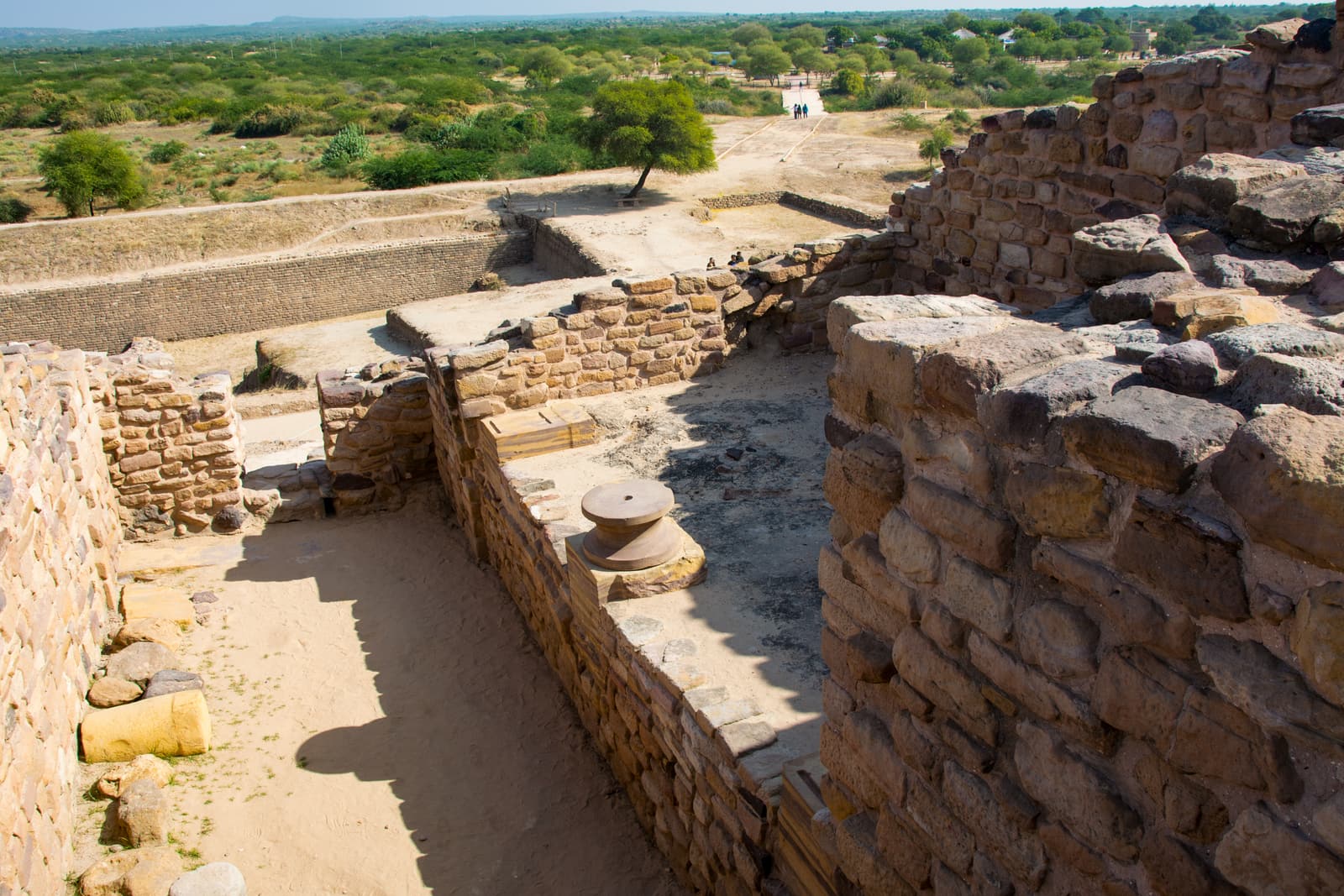
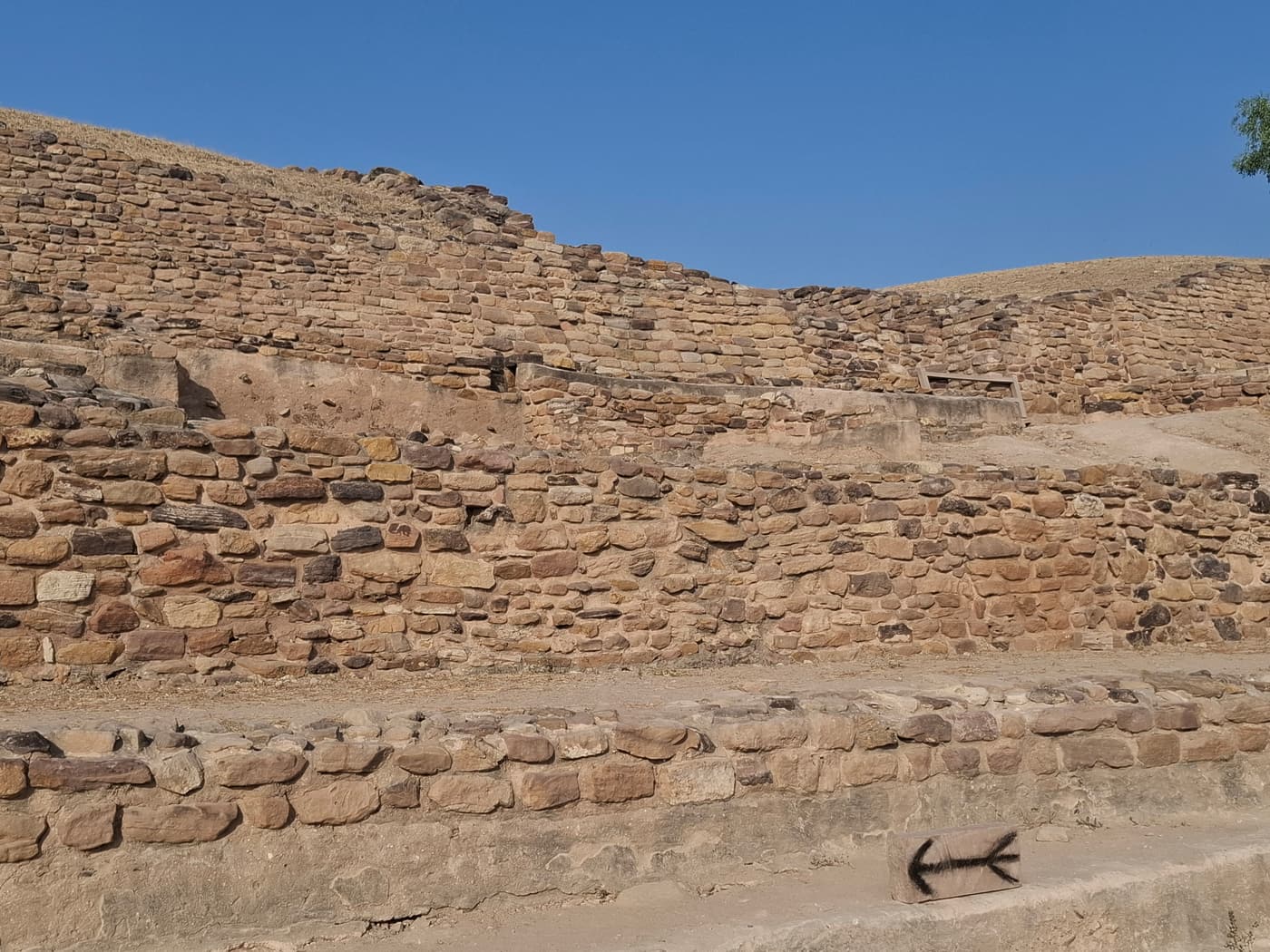
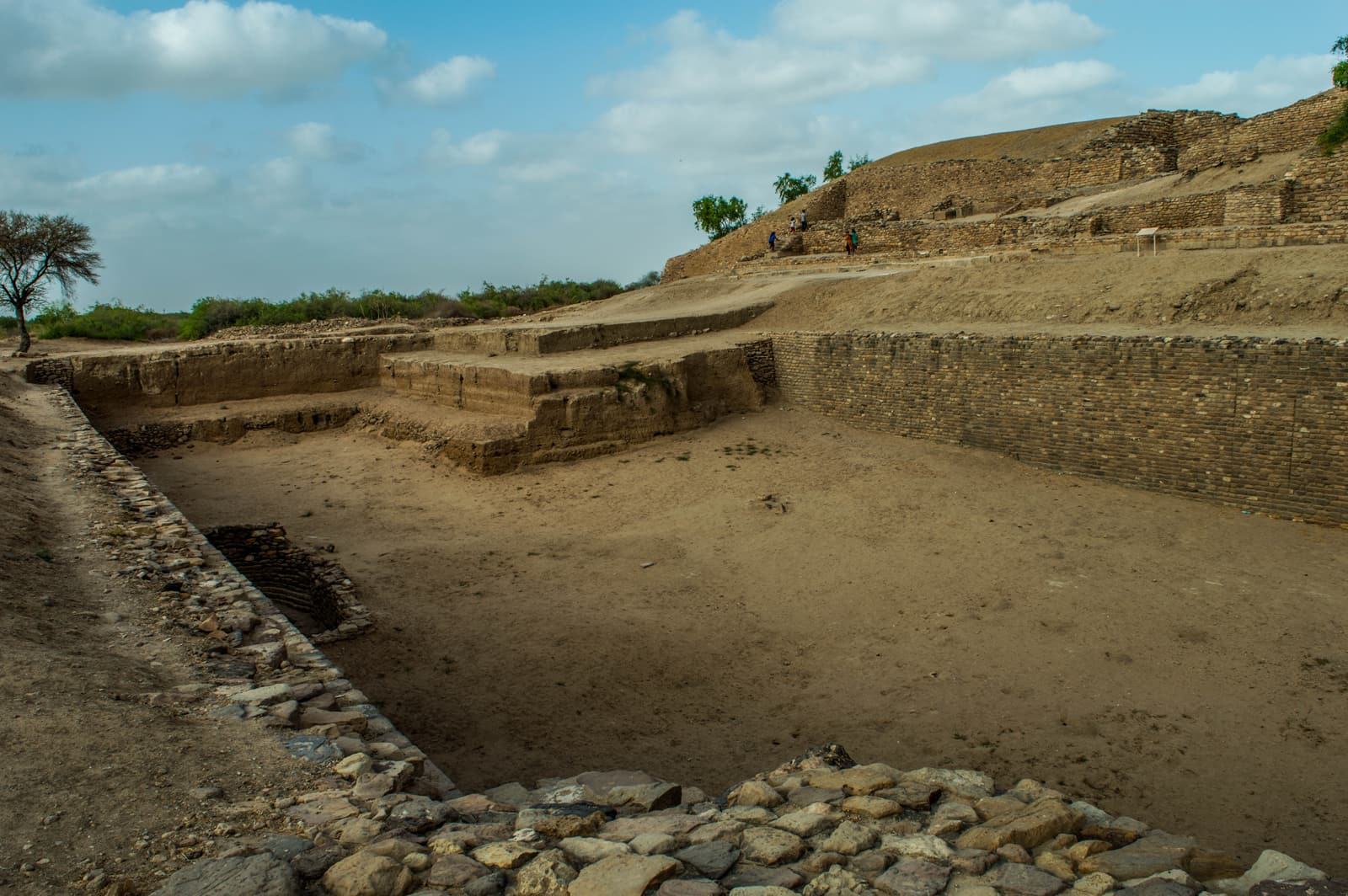
The gate faces north across a vast open space that the excavators identified as a ceremonial ground or stadium: about 283 m long and 47 m wide, with tiers of stepped seating along its sides. A smaller ground lies next to it. Whether it hosted markets, festivals, processions or games, it was the stage on which the citadel and the town met.
What to see and do at North Gate, Signboard & Stadium
See where the signboard was found
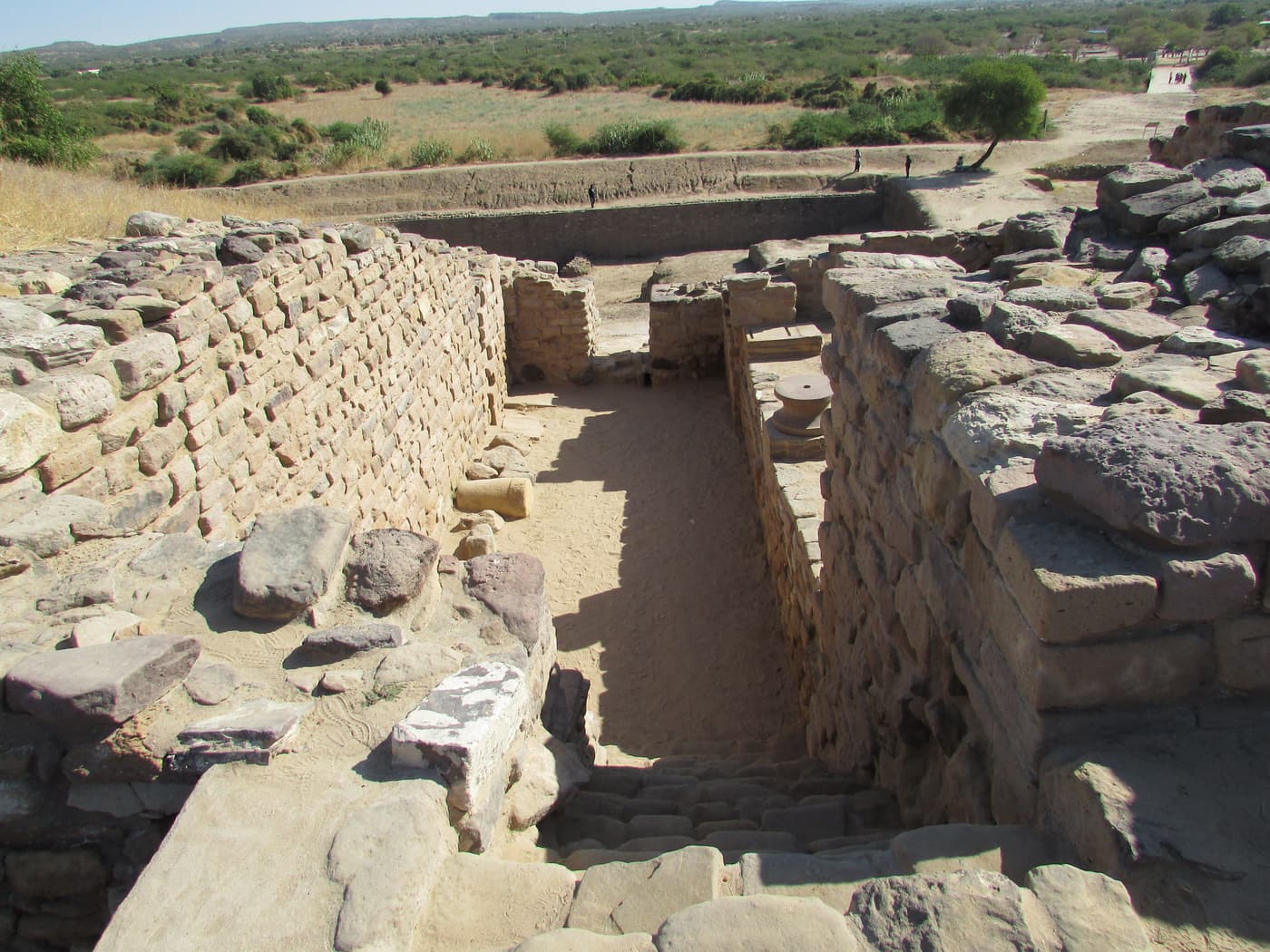
The original inscription has been left where it lay and is kept covered to protect it, so do not expect to see gleaming white letters in the gateway. What you see is the chamber and a marker; the museum’s replica shows the signs.
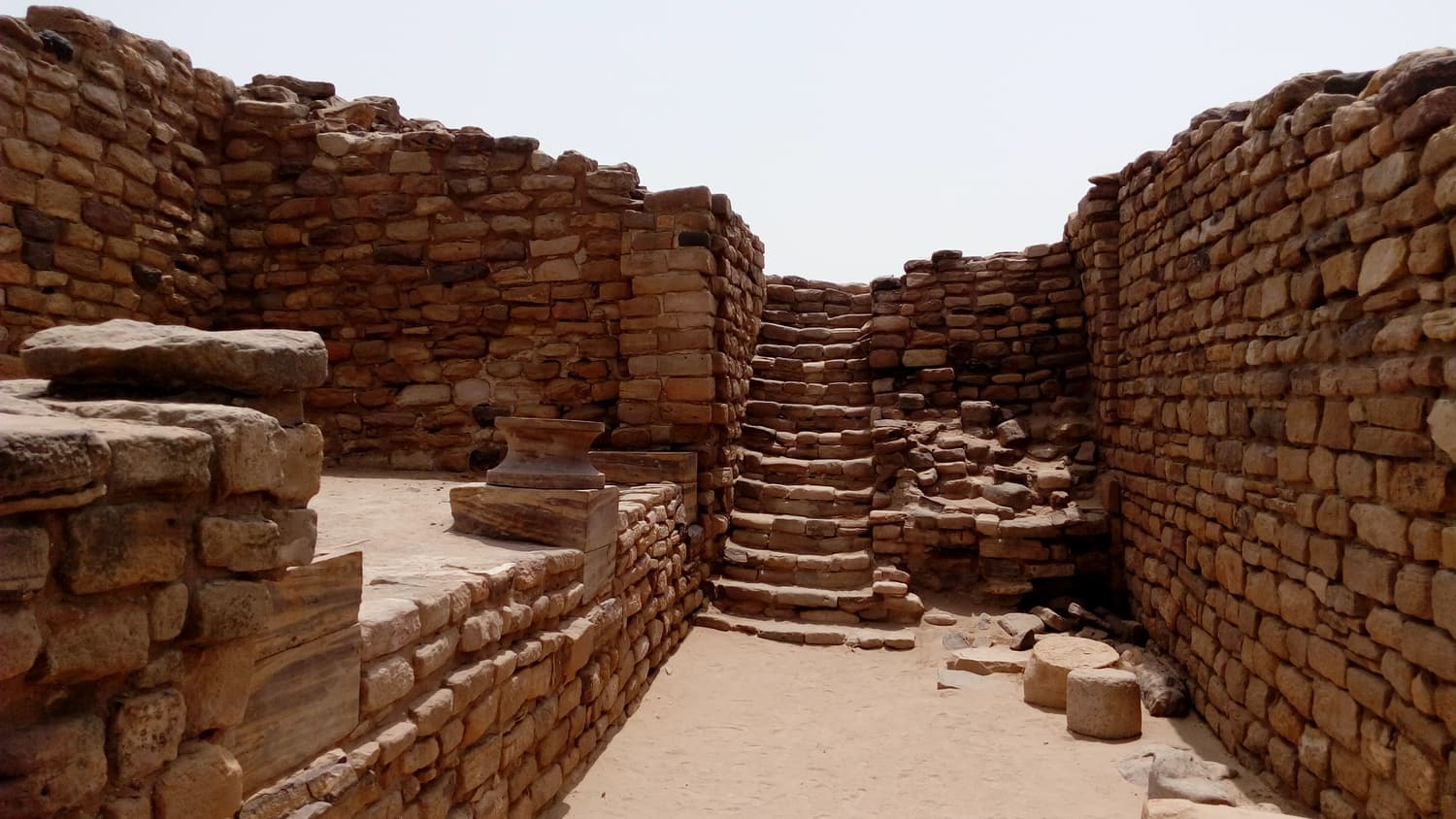
Read the gate itself
Notice the chambers on either side of the passage, the stone thresholds and the sockets for pillars. This was architecture designed to impress people as they came up from the town.
Walk the length of the ceremonial ground
Stand at one end and look down nearly three hundred metres of level ground, with the castle wall rising on one side and stepped terraces on the other. Thousands of people could have watched whatever happened here.
Play the guessing game
Copy the ten signs into a notebook at the museum and have a go. Scholars disagree even about what language the script recorded; without a bilingual text, your reading is as unprovable as theirs.
How to get to North Gate, Signboard & Stadium
- From the East Gate, cross the top of the castle to its northern side; the North Gate looks down on the ceremonial ground. The whole citadel–stadium circuit is about a kilometre of easy walking.
- Travel details are on our getting here page.
Practical tips
- Visit the museum first so you know what the signs look like before you stand in the gate.
- Be wary of confident claims — on websites or from guides — that the inscription has been deciphered. It has not.
- The stadium is easiest to appreciate from above, from the castle wall, in the low light of early morning or late afternoon.
- A wide-angle lens or a phone panorama is the only way to get the ground into one frame.
Best tours for North Gate, Signboard & Stadium
Bookable tours that include North Gate, Signboard & Stadium or the country around it — check each itinerary before you book:
 Private multi-day tour from US$843
Ahmedabad: Dholavira & White Desert 3-Day Private Tour
The only tour we found on GetYourGuide that actually goes to Dholavira. It is a private three-day loop by car from Ahmedabad: a jeep safari in the Little Rann of Kutch for wild ass and flamingos, the ruins of Dholavira and an evening on the salt flats next to the island, then the stepwell of Rani ki Vav and the Sun Temple at Modhera on the way back. Two hotel nights with breakfast, the guide and the safari are listed as included; entrance fees and other meals are not. It is a new listing without reviews, and it is a lot of road for three days — but as a single booking that solves the transport problem, nothing else comes close.
- A guided visit to the Harappan city of Dholavira
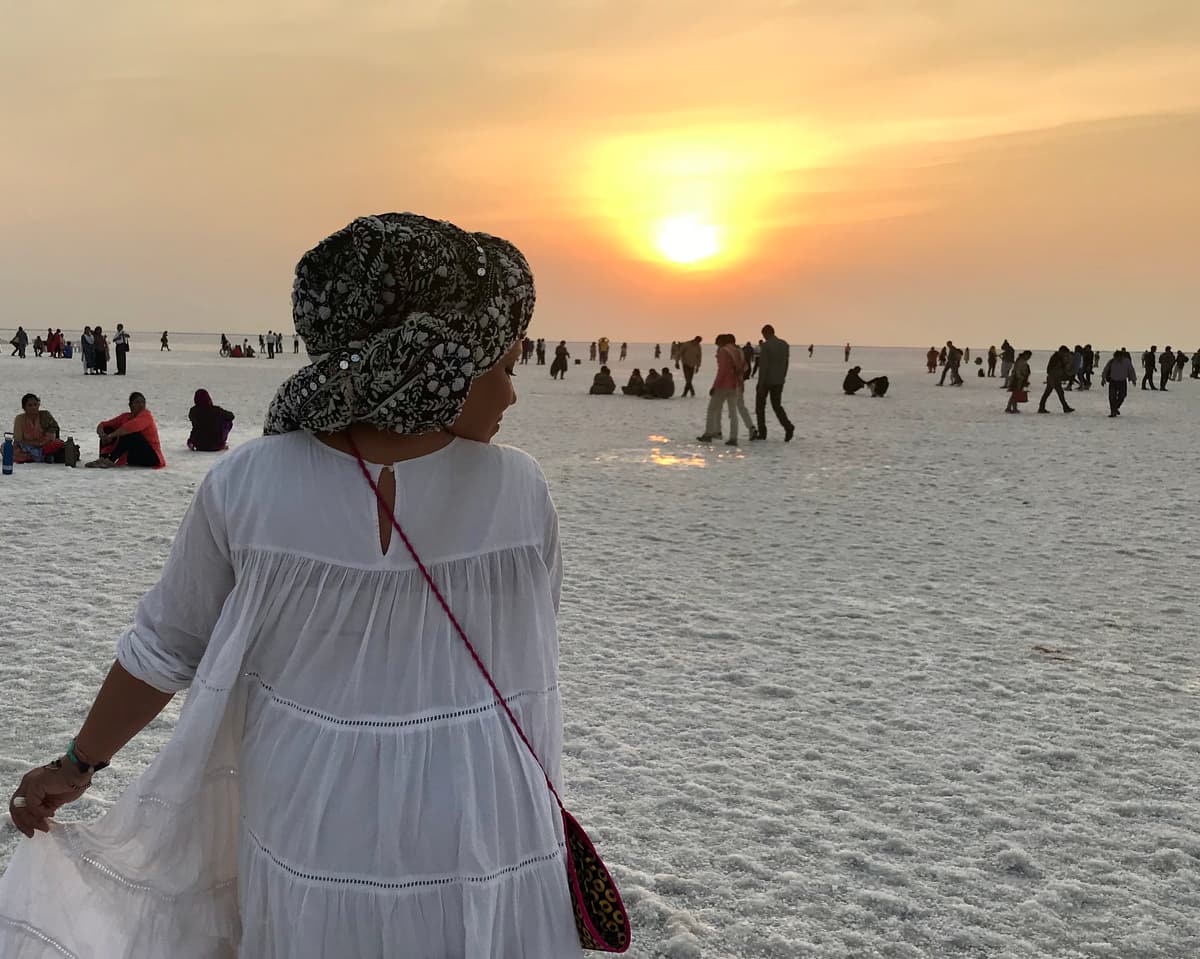
- Sunset on the white Rann beside Khadir Bet
- Little Rann jeep safari, Rani ki Vav and Modhera on the way
 Private multi-day tour from US$481
From Bhuj: 3-Day White Rann of Kutch Desert Tour
The most thorough of the Bhuj-based tours for the Dhordo side of the Rann. It strings together Rogan art at Nirona, the salt desert at sunset and again at sunrise, the bhungas of Dhordo, Khavda’s potters and the view from Kalo Dungar, sleeping two nights at a village resort in Hodka rather than driving back to Bhuj. Rann permit fees are payable directly. It does not include Dholavira — but it ends at Khavda’s doorstep, so ask the operator about adding the Road to Heaven and Dholavira as an extra day.
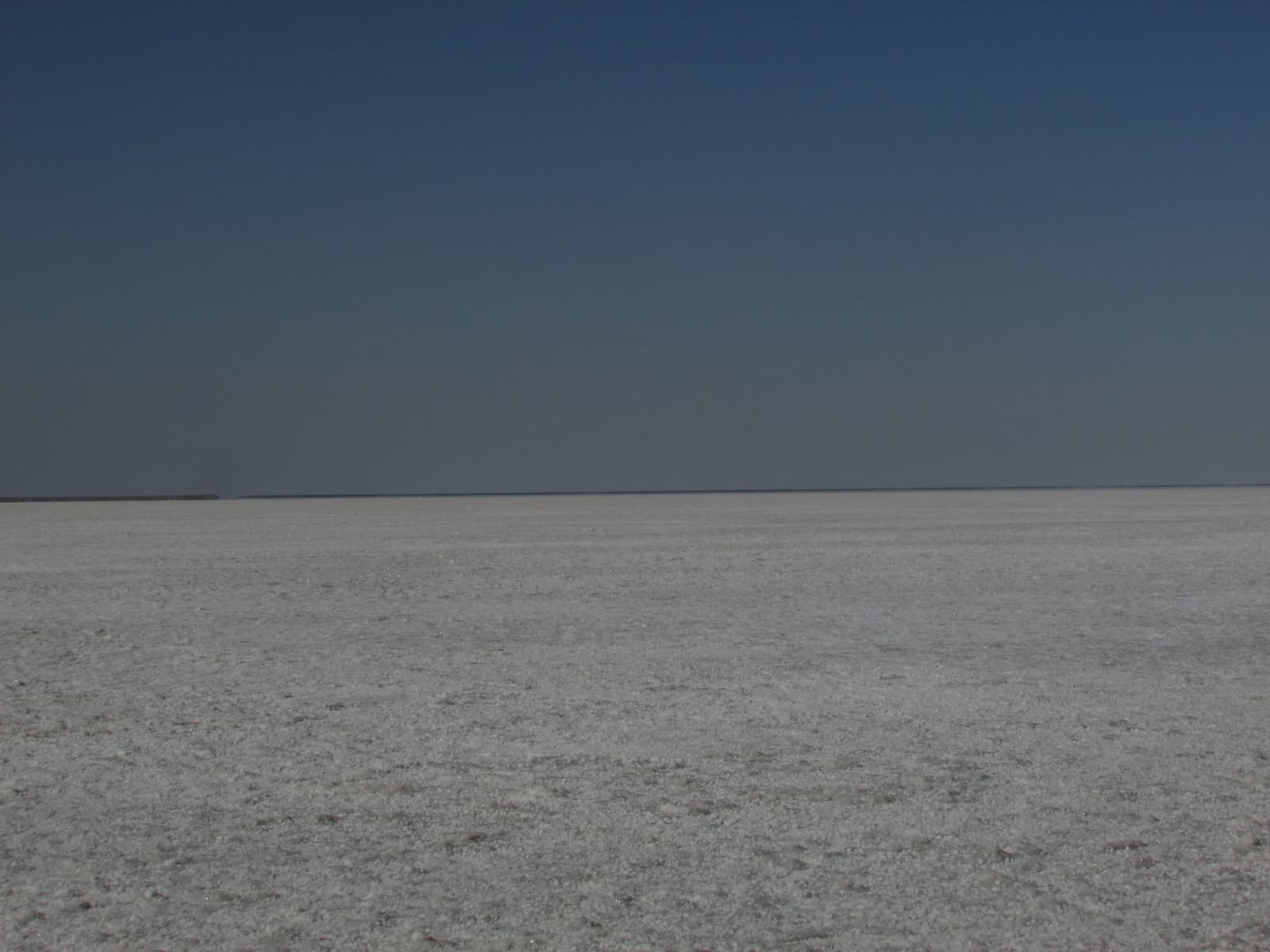
- Sunrise and sunset on the White Rann
- Nirona, Dhordo, Khavda and Hodka village visits
- Kalo Dungar viewpoint; two nights at a village resort in Hodka
 Private multi-day tour from US$352
From Bhuj: 3-Day Kutch Tour with White Rann & Villages
A gentler, cheaper version of the tour above that stays both nights in Bhuj. Day one is the old palaces and Bhujodi; day two is the roughly 80 km run out to the White Rann with Hodka and Dhordo and a sunset on the salt; day three is simply the airport transfer. It is in effect two days of sightseeing, and it does not go to Dholavira or Kalo Dungar. New listing, no reviews yet.
- Aina Mahal, Prag Mahal and the weavers of Bhujodi
- A day trip to the White Rann, Hodka and Dhordo
- Two hotel nights in Bhuj with breakfast and airport transfers