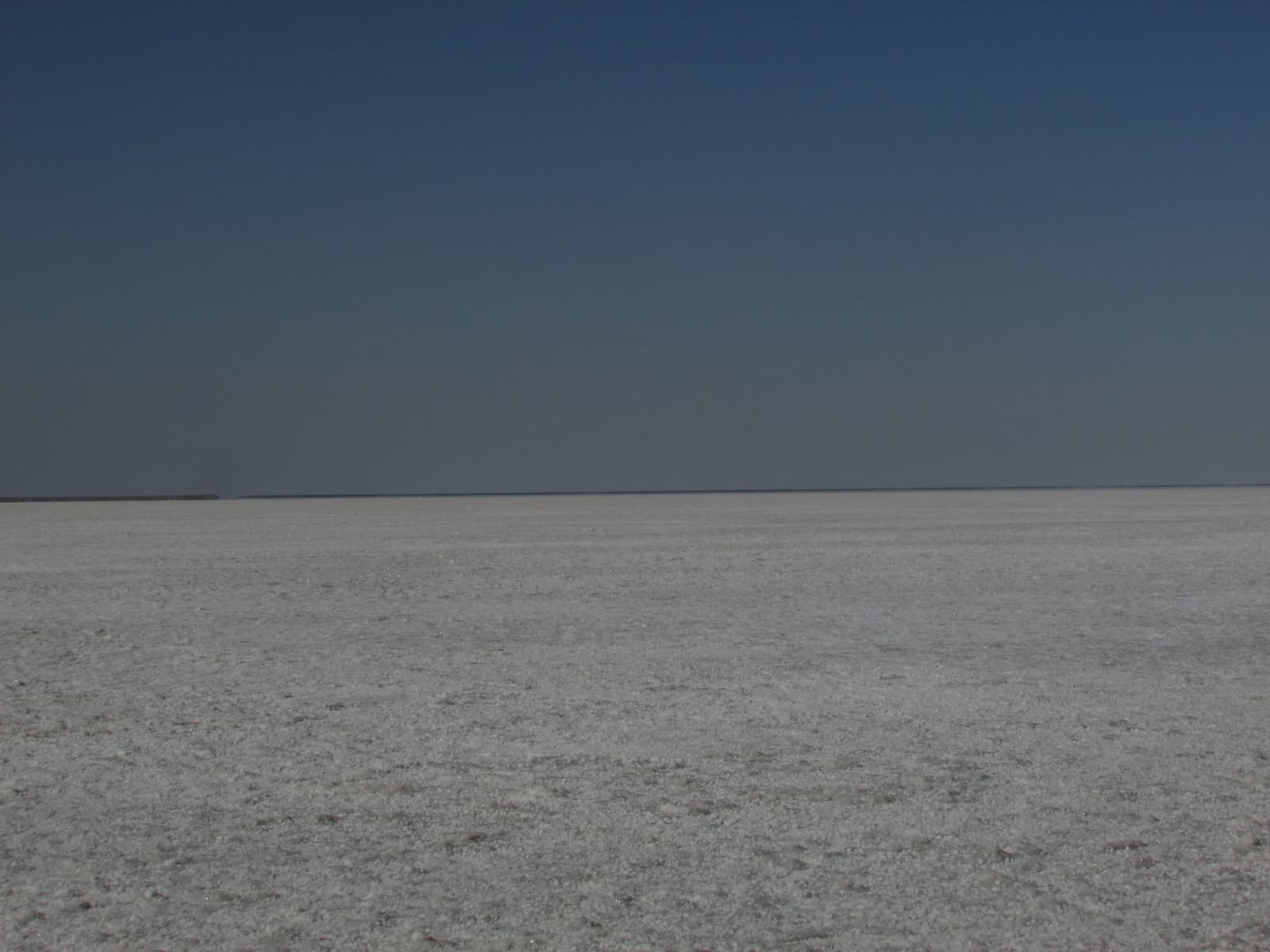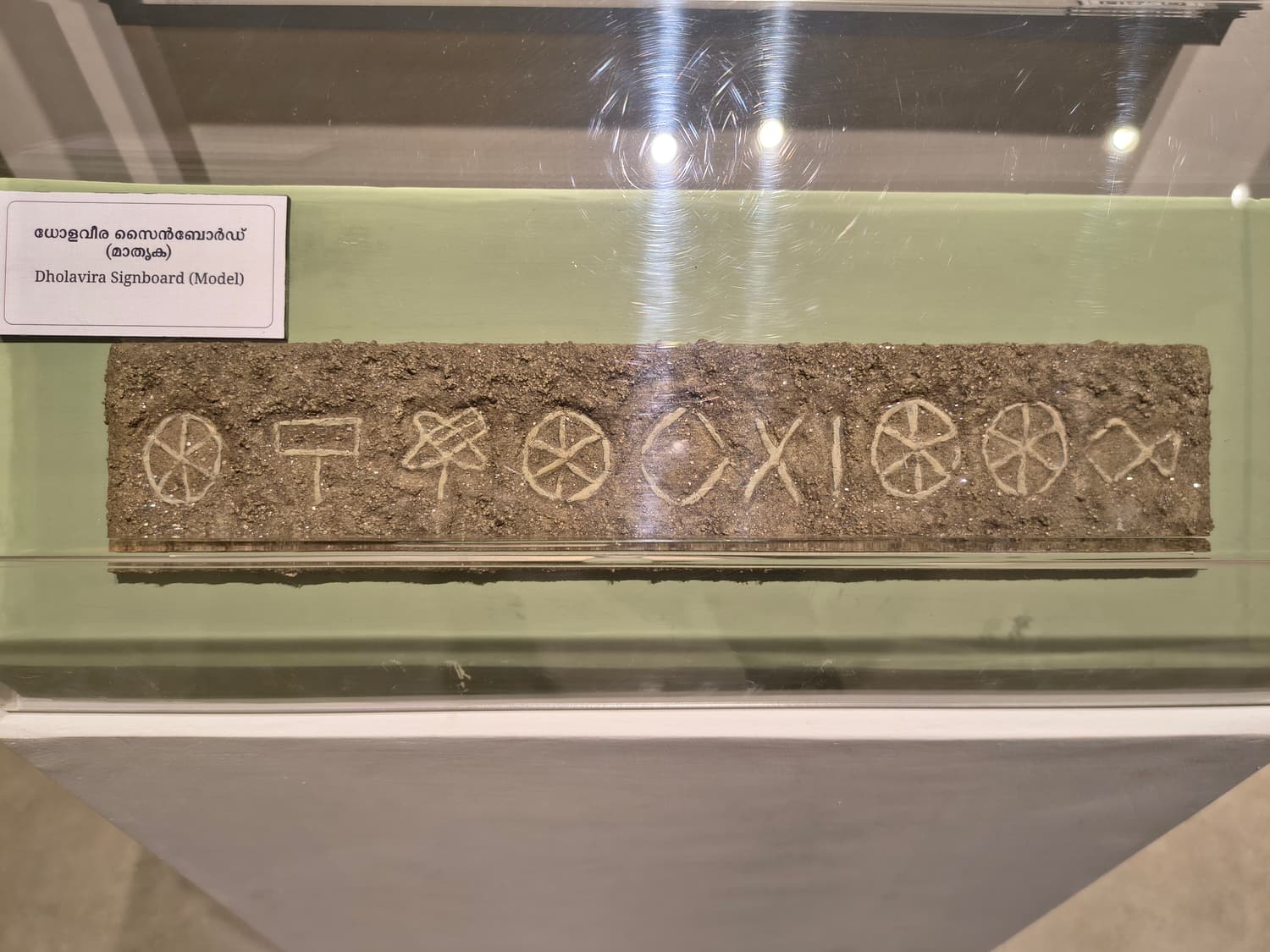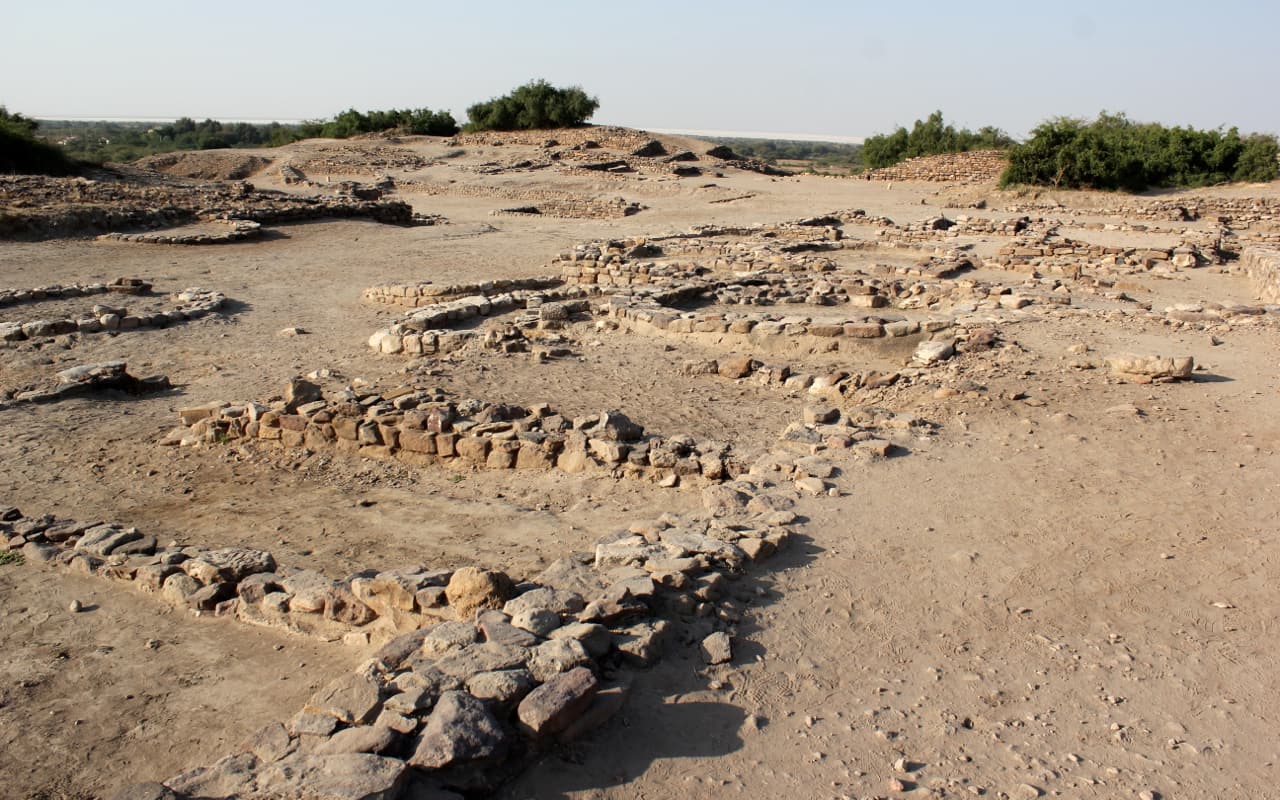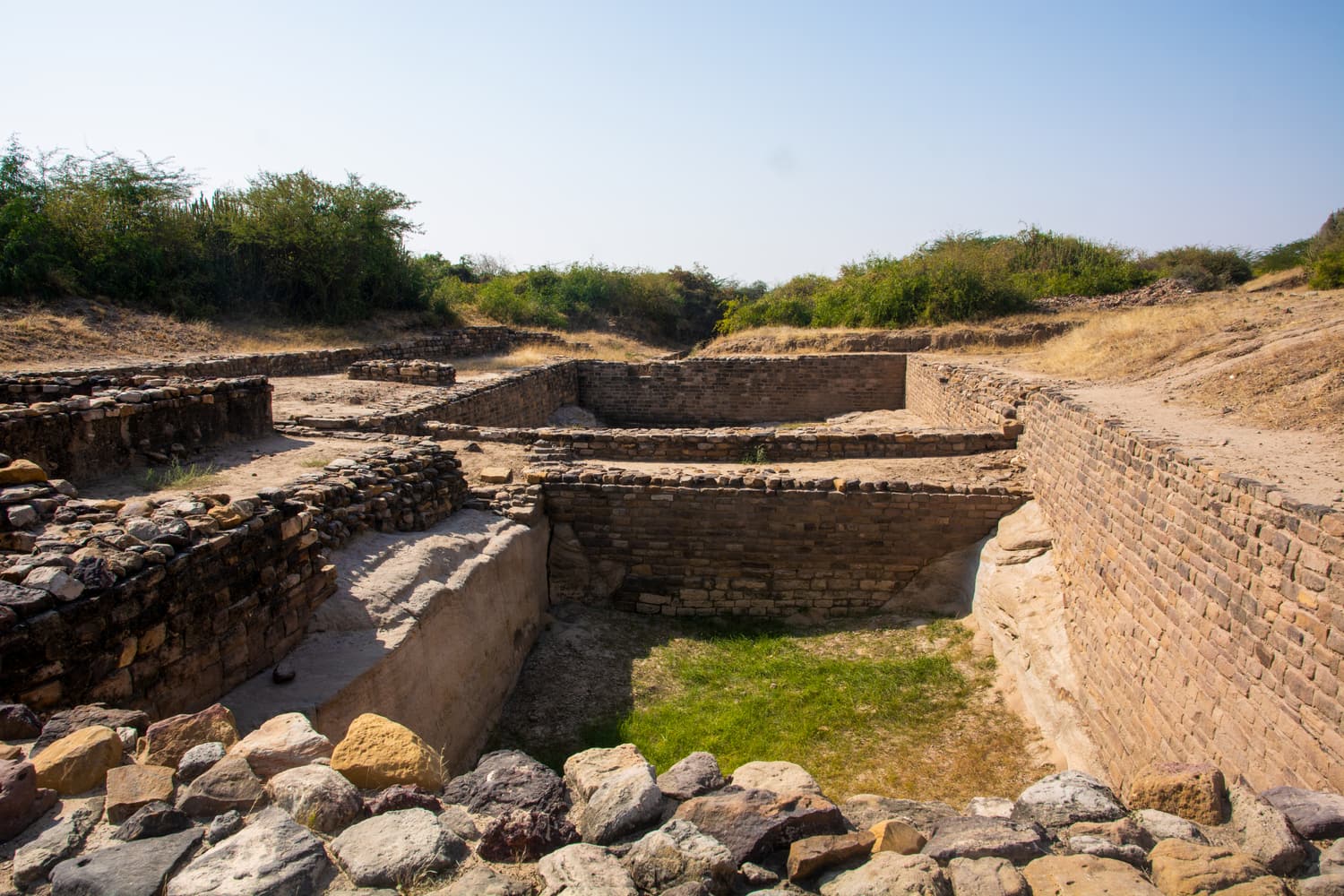
Dholavira stands on an island in a salt desert, in a region with no permanent river, brackish groundwater and a monsoon that some years barely arrives. That a city of thousands flourished here for the better part of fifteen centuries is down to one thing: its people were extraordinarily good at catching and keeping water.
The city was sited between two seasonal streams, the Mansar to the north and the Manhar to the south. The Harappans threw stone dams across both and led the floodwater into a chain of reservoirs laid out around the eastern, southern and western sides of the walled city. Archaeologists have traced sixteen or more of them. Some are built of masonry; others are cut straight down into the bedrock. Because the ground slopes by more than ten metres from one corner of the city to the other, water could be moved between them by gravity.
Rain that fell on the citadel was not wasted either: stone drains gathered it and sent it down to the tanks. Taken together the reservoirs covered something like a tenth of the city’s area. UNESCO singled out this water system when it inscribed Dholavira on the World Heritage List in 2021, and it is the main reason to come.
What to see and do at The Reservoirs
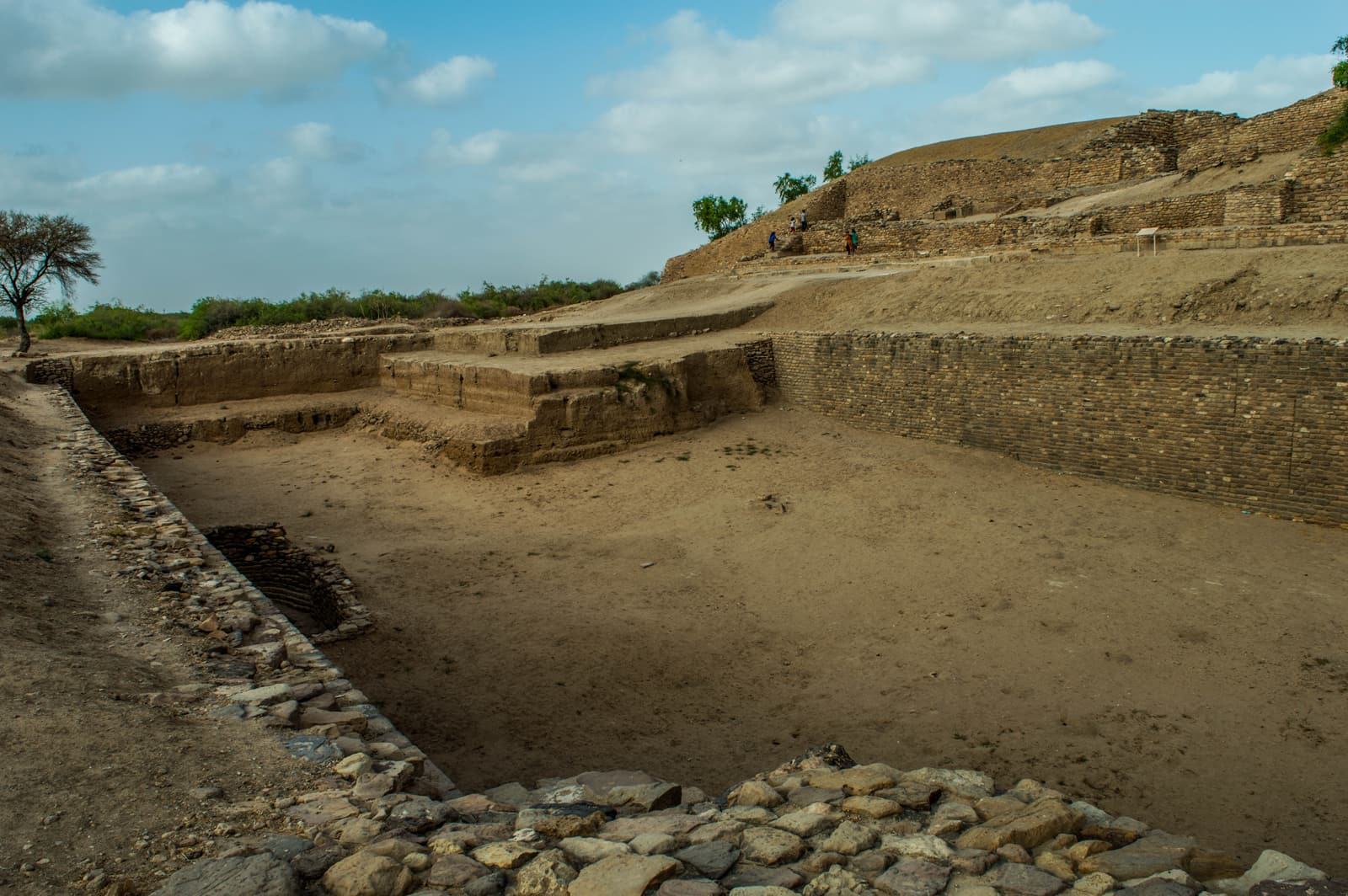
Stand at the edge of the eastern reservoir
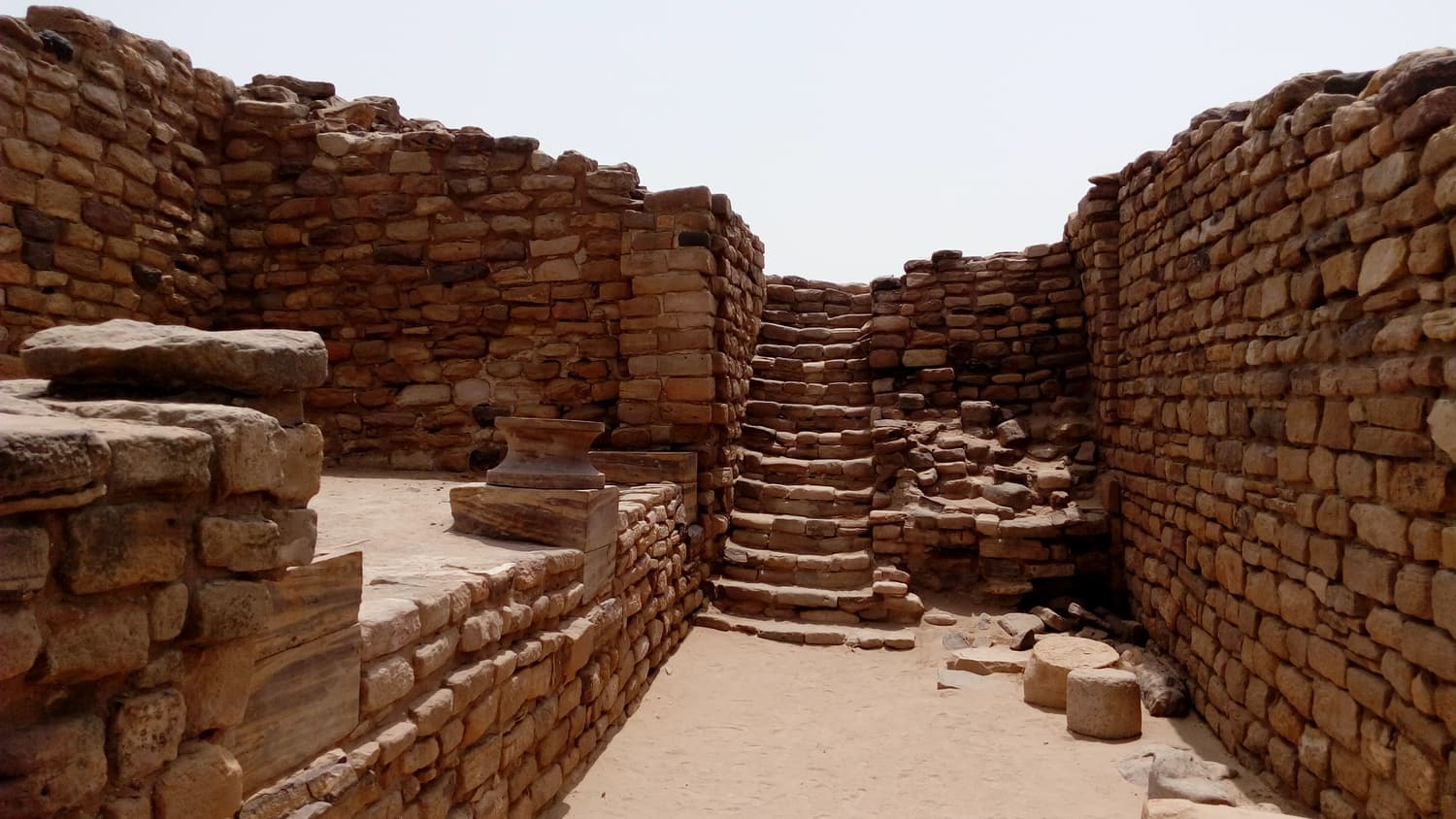
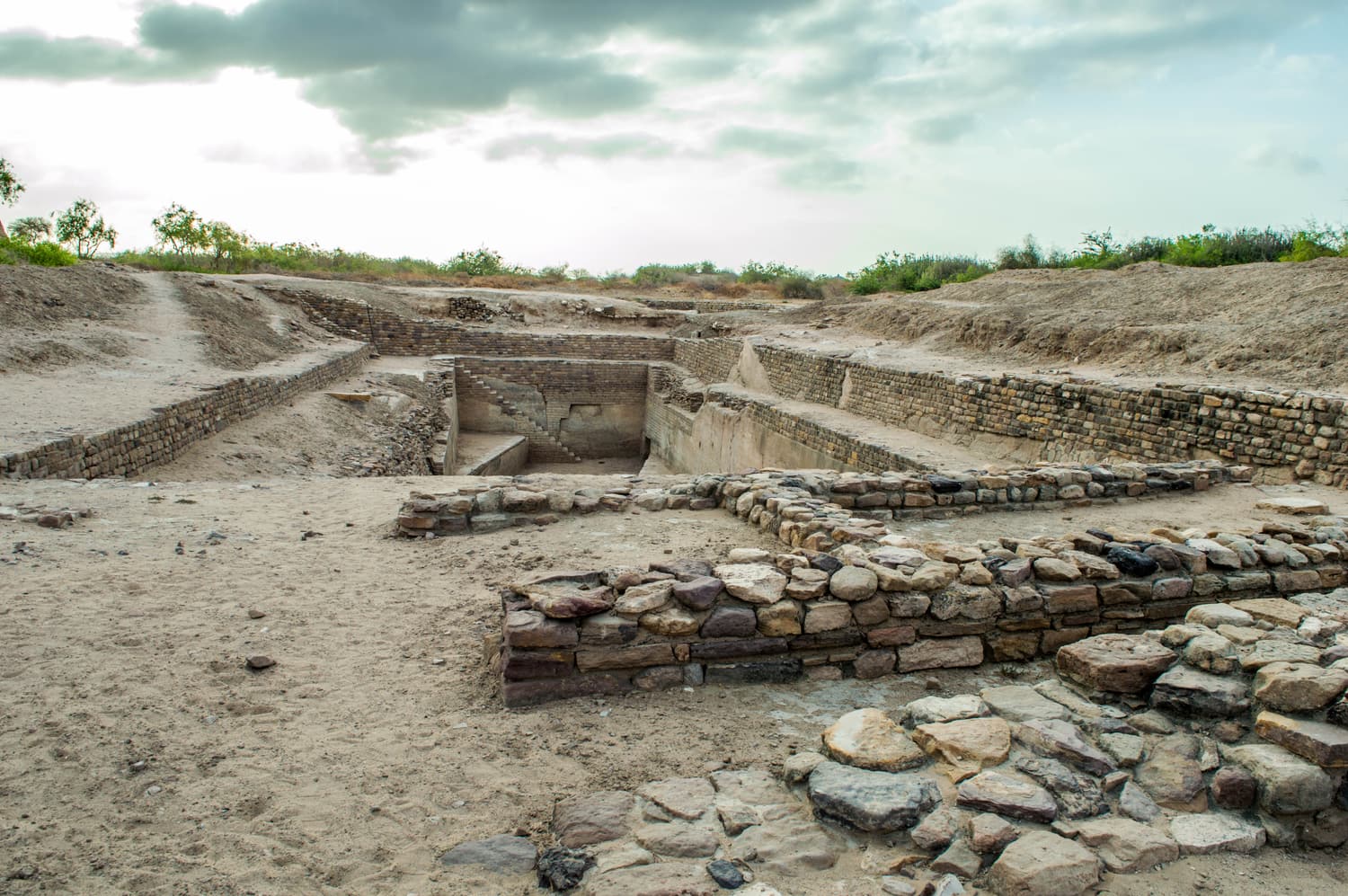
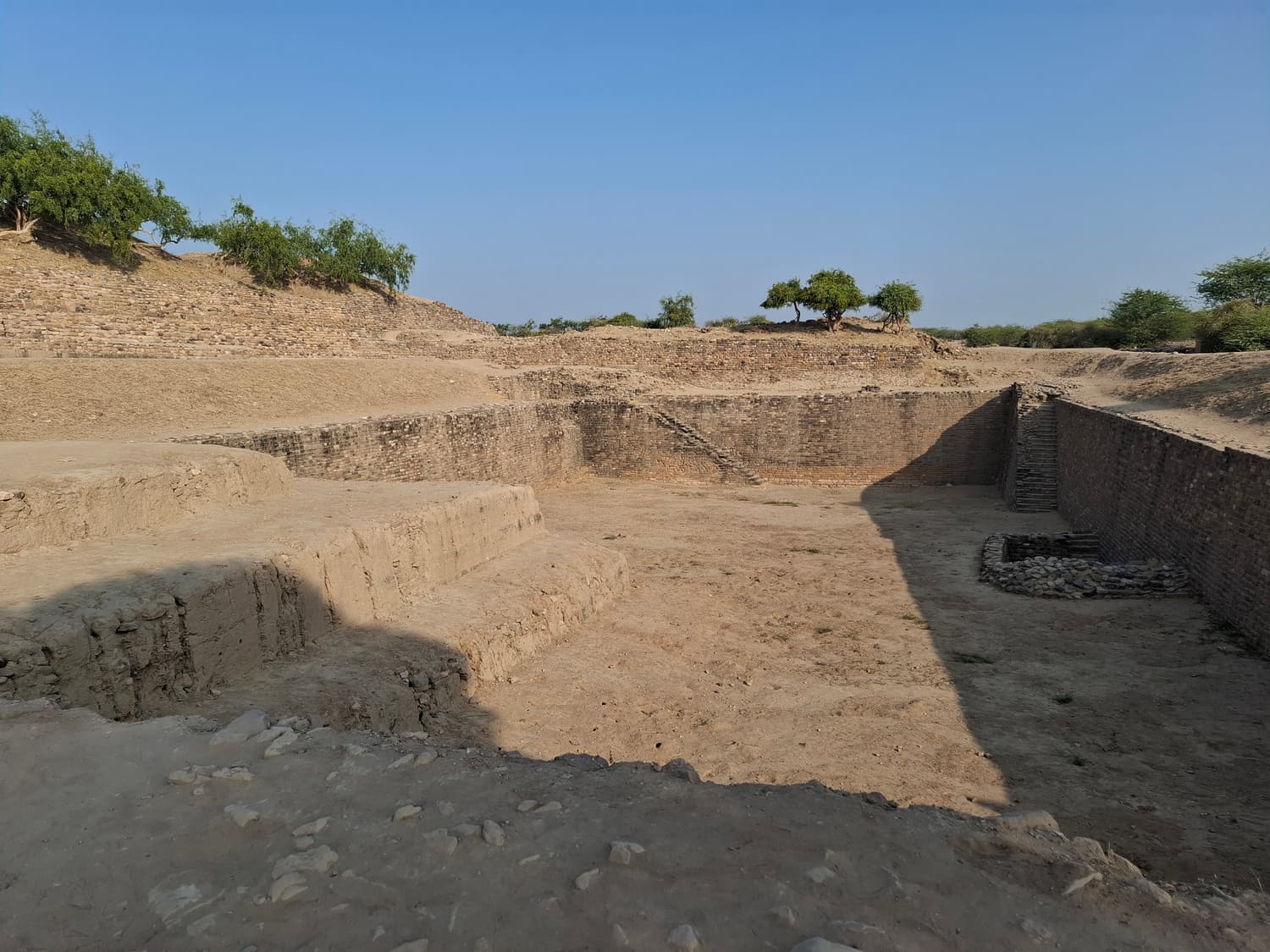
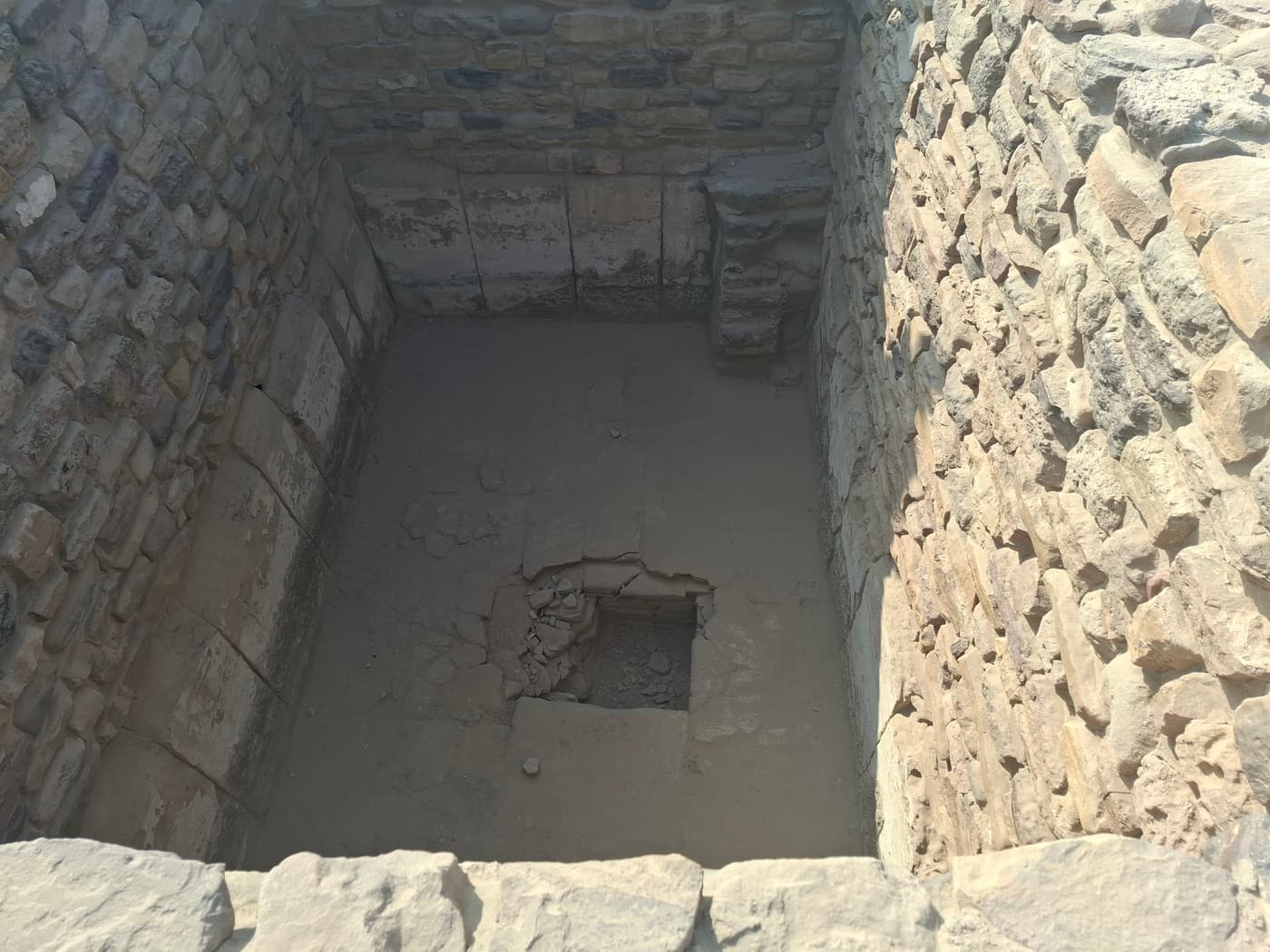
The showpiece: a rectangular tank beside the castle roughly 73 m long and 29 m wide, cut about ten metres deep, with a flight of thirty steps descending one corner and a rock-cut well in its floor. It is the nearest thing the Bronze Age has to the stepwells Gujarat would build three thousand years later.
Walk the southern tanks
South of the castle a row of interconnected reservoirs was hewn out of the rock, with ramps, steps and settling basins. Look for the masonry channel that brought stormwater down from the citadel into them.
Spot the inlet channels and dams
On the edges of the site you can make out where the two streams were dammed. The water was led in through stone inlets and passed from tank to tank, dropping its silt as it went, so that the last reservoirs held the cleanest water.
Compare it with a modern stepwell
If your trip includes Rani ki Vav at Patan or the stepwell at Adalaj, remember this place. The idea of stepping down to stored water, and of making that descent beautiful, is far older in Gujarat than those medieval masterpieces.
How to get to The Reservoirs
- The eastern reservoir is the first major structure on the path from the entrance, before you climb to the citadel. The southern series lies below the castle’s south wall; ask your guide to take you round, as casual visitors often miss it.
- See getting to Dholavira for the journey from Bhuj and Ahmedabad.
Practical tips
- After a good monsoon — roughly August to October — some tanks hold a little water and the site is green, which makes the system easier to imagine. In winter and spring they are dry.
- Keep back from the edges. The drops are sheer, there are few railings and the stone can be loose.
- Morning light falls into the eastern reservoir; by late afternoon its floor is in shadow.
- The museum has a plan of the whole water system. Look at it first and the reservoirs will make much more sense on the ground.
Best tours for The Reservoirs
Bookable tours that include The Reservoirs or the country around it — check each itinerary before you book:
Private multi-day tour from US$843 Ahmedabad: Dholavira & White Desert 3-Day Private Tour
The only tour we found on GetYourGuide that actually goes to Dholavira. It is a private three-day loop by car from Ahmedabad: a jeep safari in the Little Rann of Kutch for wild ass and flamingos, the ruins of Dholavira and an evening on the salt flats next to the island, then the stepwell of Rani ki Vav and the Sun Temple at Modhera on the way back. Two hotel nights with breakfast, the guide and the safari are listed as included; entrance fees and other meals are not. It is a new listing without reviews, and it is a lot of road for three days — but as a single booking that solves the transport problem, nothing else comes close.
- A guided visit to the Harappan city of Dholavira
- Sunset on the white Rann beside Khadir Bet
- Little Rann jeep safari, Rani ki Vav and Modhera on the way
 Private day trip from US$145
Ahmedabad: Sun Temple of Modhera & Queen’s Stepwell Day Trip
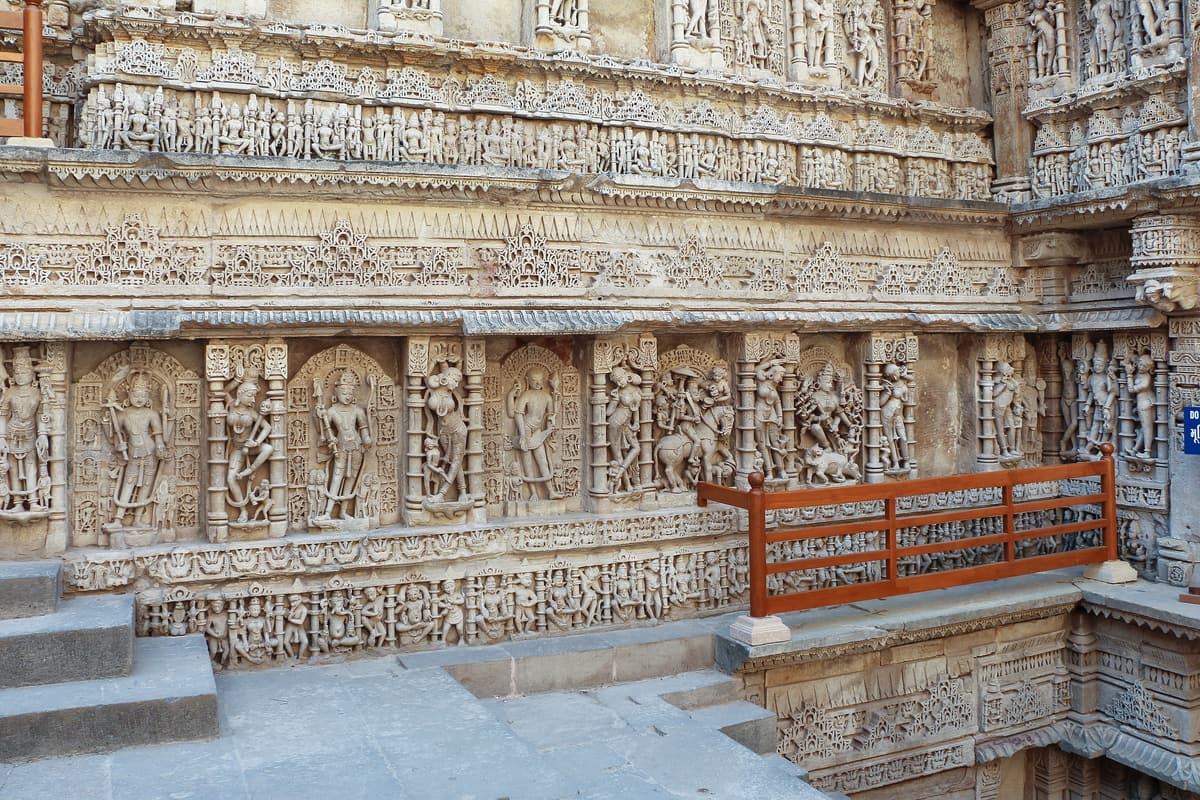
The best-reviewed day trip in the region and a perfect companion to Dholavira: another feat of Gujarati water architecture, three and a half thousand years younger. A long private day from Ahmedabad covers the Sun Temple with its stepped tank, the astonishingly carved stepwell at Patan and a family of Patola weavers.
- The 11th-century Sun Temple at Modhera
- Rani ki Vav, the UNESCO-listed stepwell at Patan
- A Patola silk weaving workshop
 Private multi-day tour from US$889
6-Day Kutch Tour with White Desert and Heritage Sites
The widest Kutch itinerary on GetYourGuide: Ahmedabad, Patan and Modhera, a night at Bajana on the Little Rann, three nights in Bhuj with a day at Mandvi and a long day to the villages, Kalo Dungar and the White Rann, then the eight-hour drive back. Three-star hotels and breakfast are listed as included. It still omits Dholavira — the one obvious gap — so if the ruins are your reason for coming, ask whether a day can be swapped. No reviews yet.
- Rani ki Vav, Modhera and the Little Rann on the way west
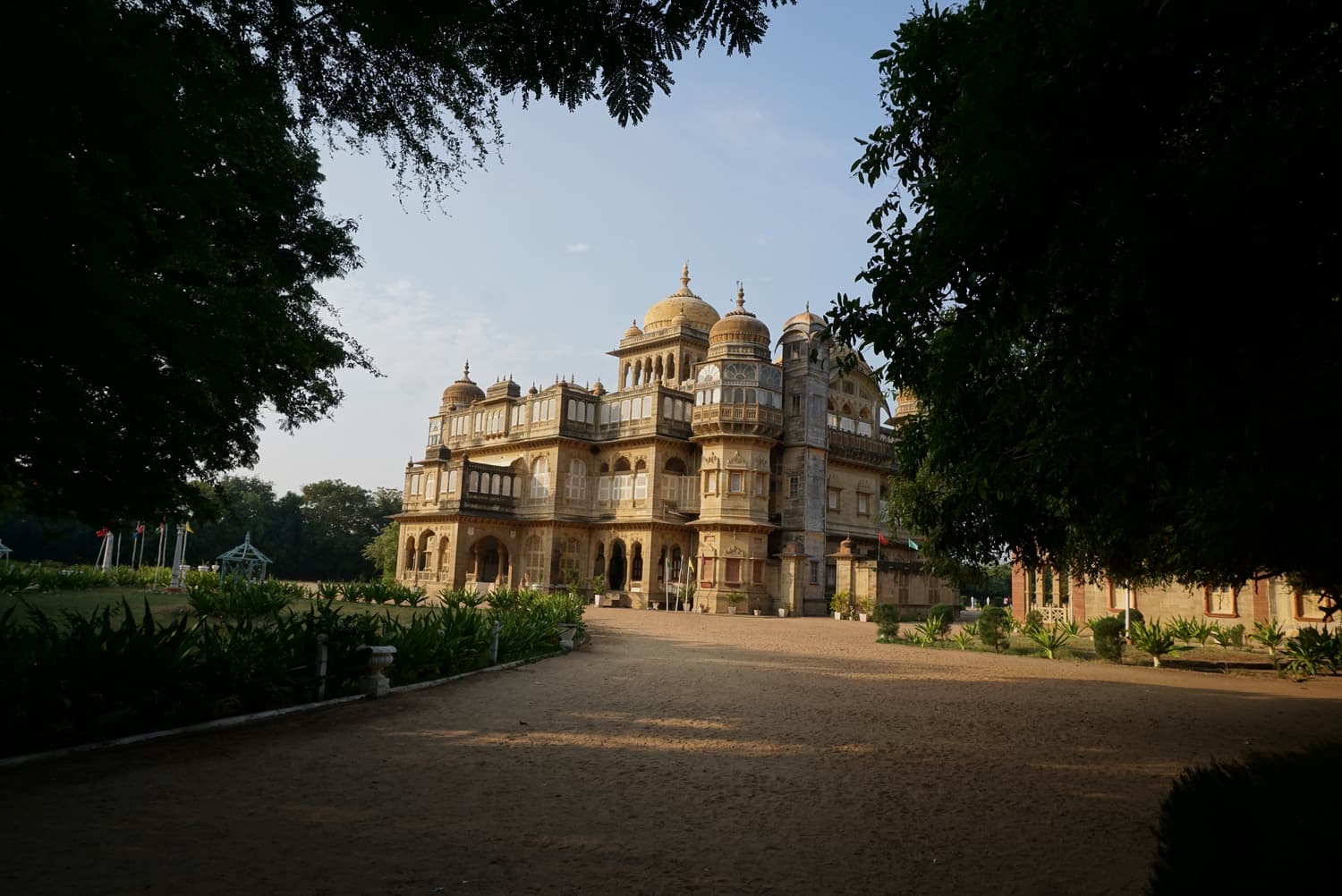
- Bhuj, Bhujodi, Mandvi beach and Vijay Vilas Palace
- White Rann, Hodka, Ludiya, Dhordo and Kalo Dungar