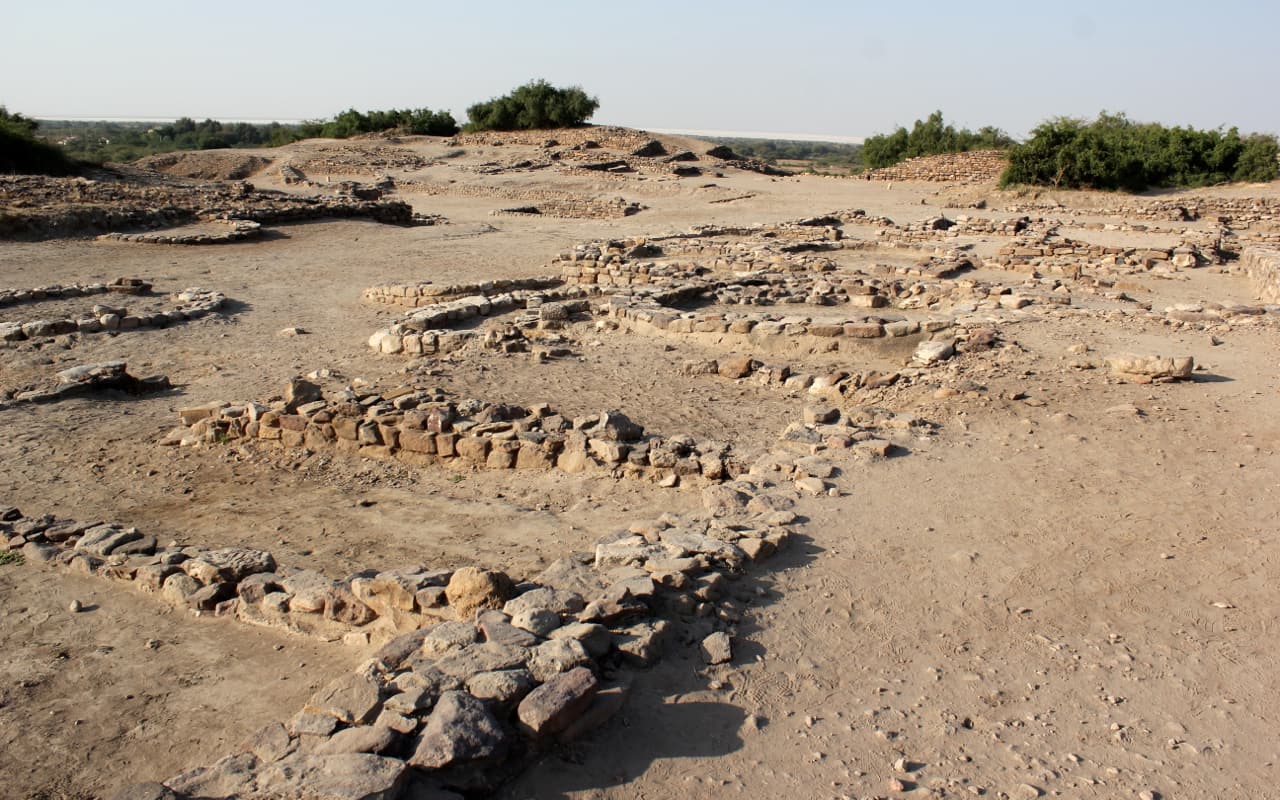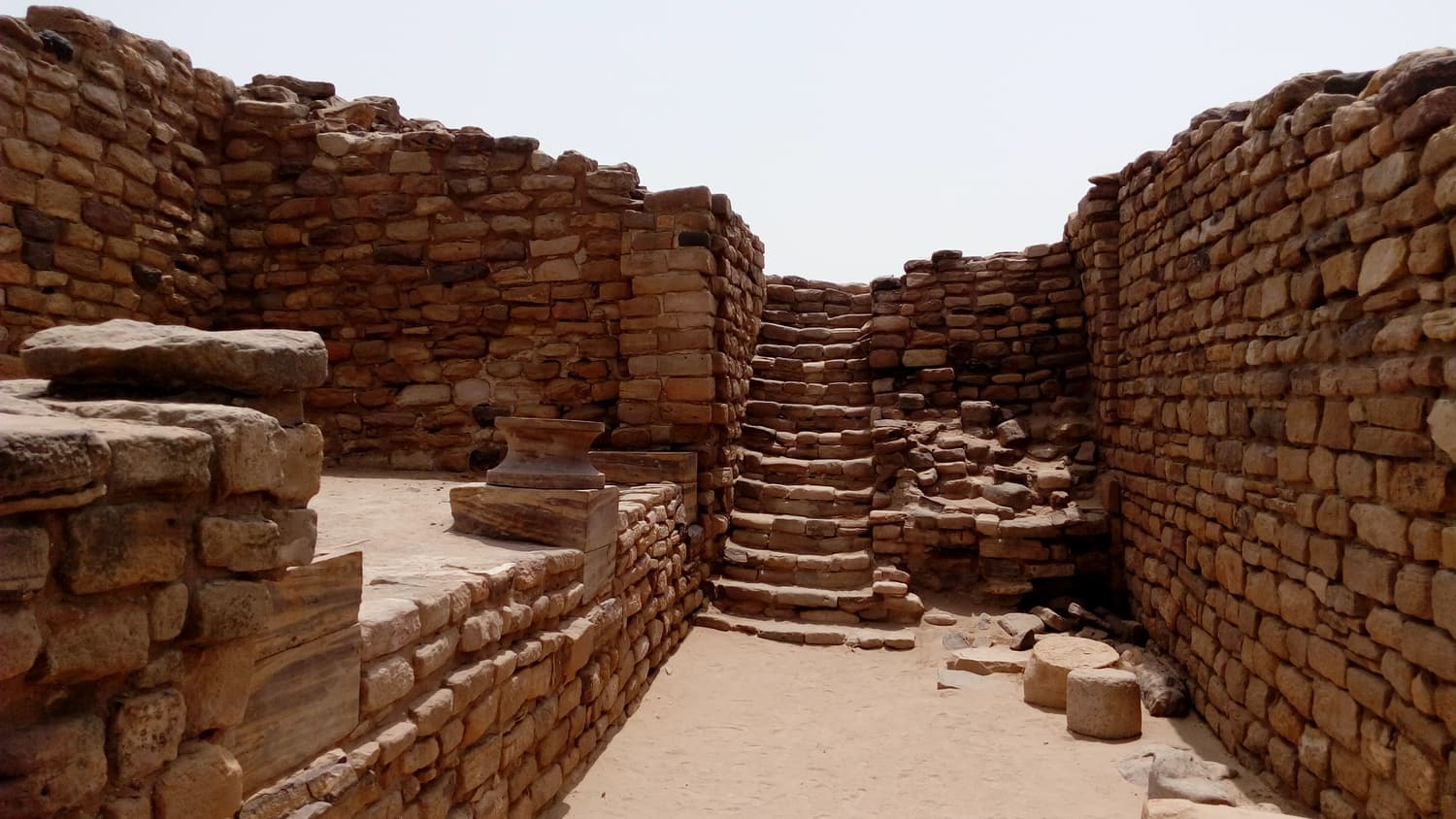
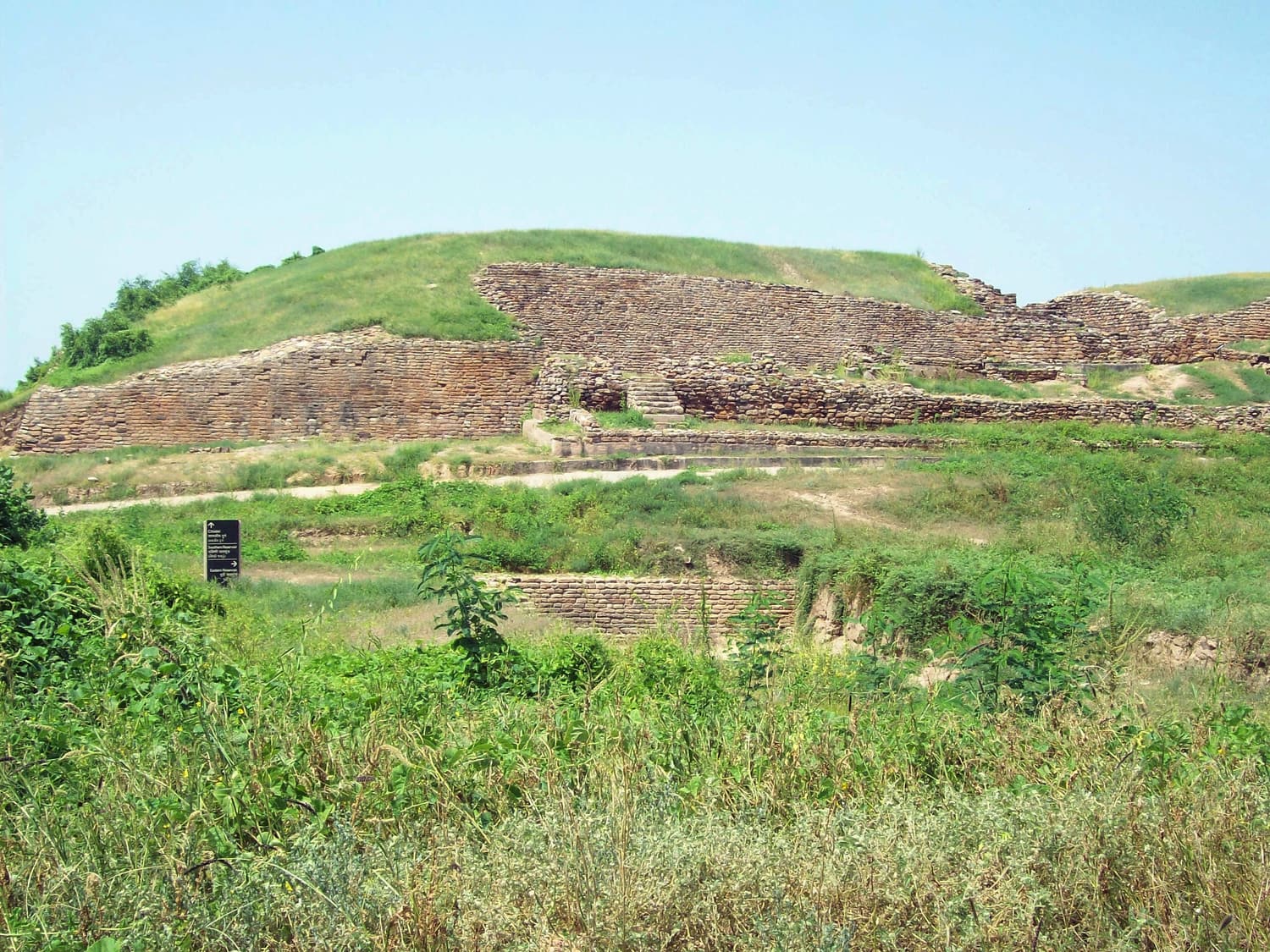
Every Harappan city had a high, walled quarter set apart from the rest. At Dholavira it survives better than almost anywhere: a roughly square “castle” standing well above the plain, wrapped in stone-faced walls many metres thick, with a lower enclosure — the excavators called it the “bailey” — attached to its western side. Together they form the citadel, and they are the first thing you climb when you walk in from the entrance.
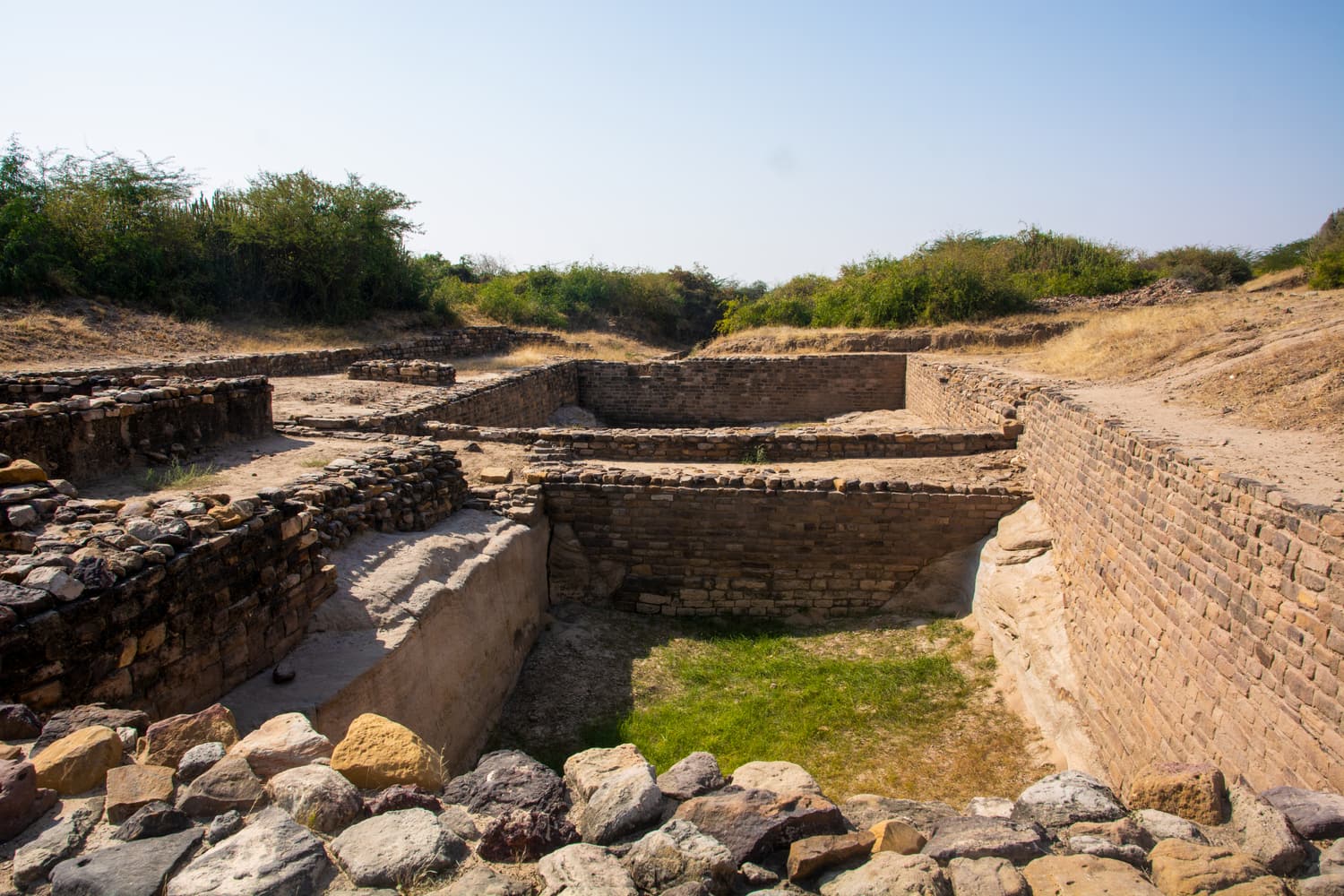
Unlike Mohenjo-daro and Harappa, which were built largely of baked brick, Dholavira was built of stone. Dressed sandstone and limestone blocks face the mud-brick cores of the walls, which is why the gateways, stairs and drains here still have crisp edges after more than four thousand years. The castle had a gate in each side; the North and East Gates were elaborate affairs with flanking chambers, sunken passages and stone pillars polished to a sheen.
Nobody knows who lived up here. There is no palace and no obvious temple, only substantial buildings, water tanks, a large well and a network of drains designed to catch every drop of rain that fell on the mound. What the citadel shows clearly is control: of people, who had to pass its gates, and of water, which was collected here and led down to the reservoirs below.
What to see and do at The Citadel
Walk through the East Gate
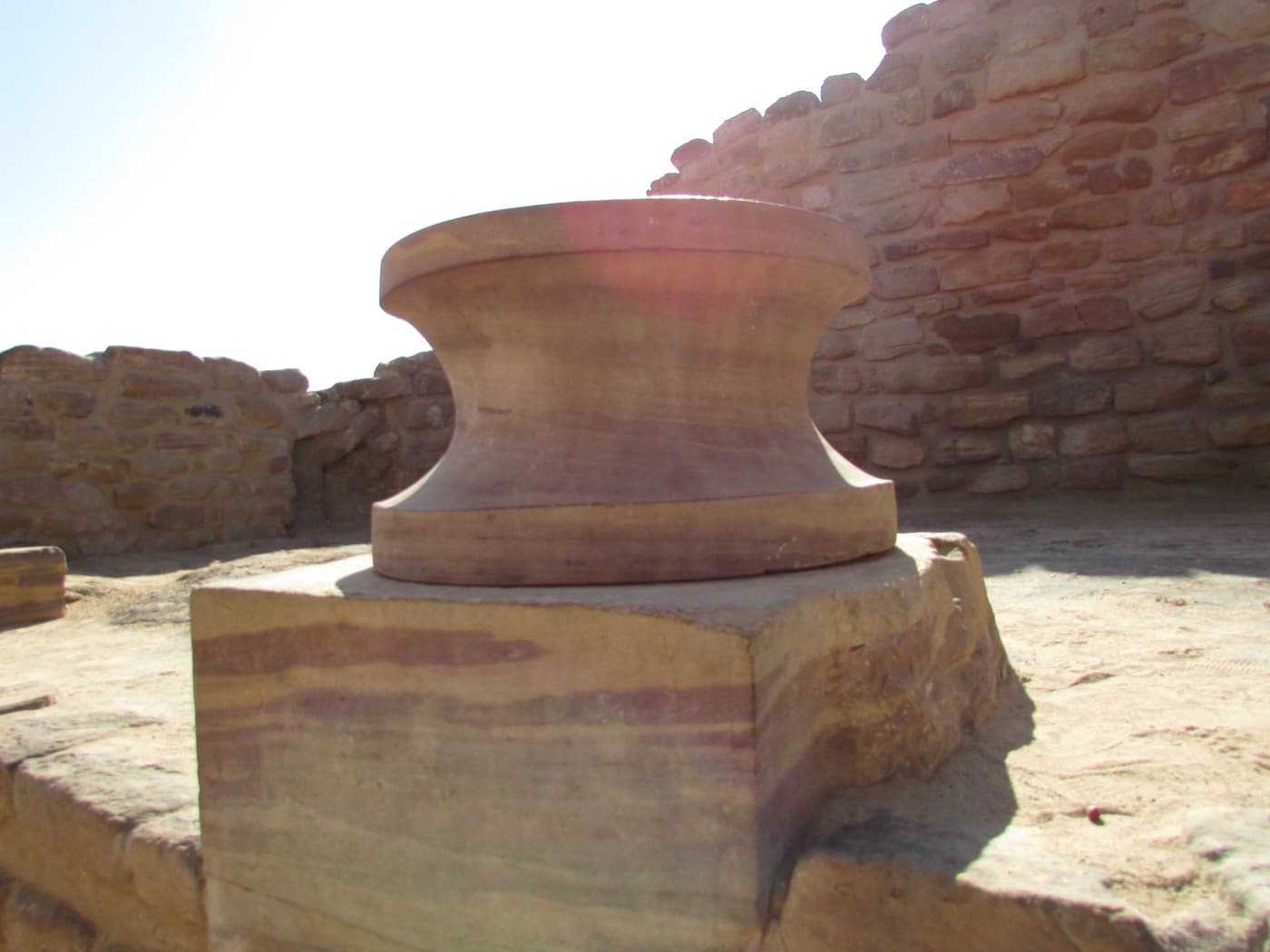
The best-preserved entrance to the castle: a flight of steps, a sunken passage and side chambers, with limestone pillar bases still in place. Look for the smooth, banded stone of the pillar members — the Harappans quarried it locally and polished it so finely that it still catches the light.
Find the North Gate
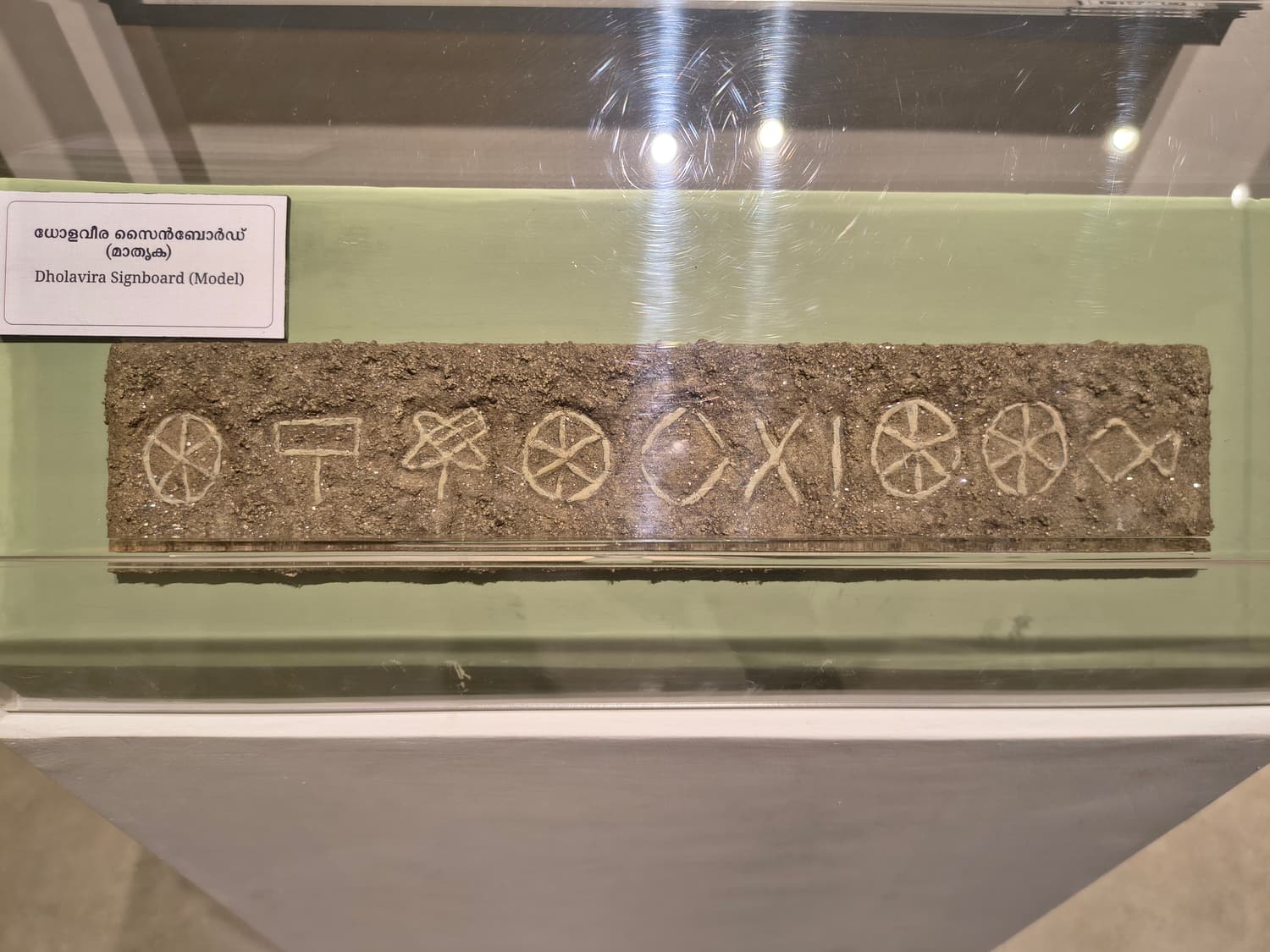
The ceremonial front door, facing the stadium and the town. It was in a side chamber here that the ten-sign inscription was found lying face down. A shelter protects the spot; the signs themselves are best understood from the replica in the museum.
Look for the wells and tanks
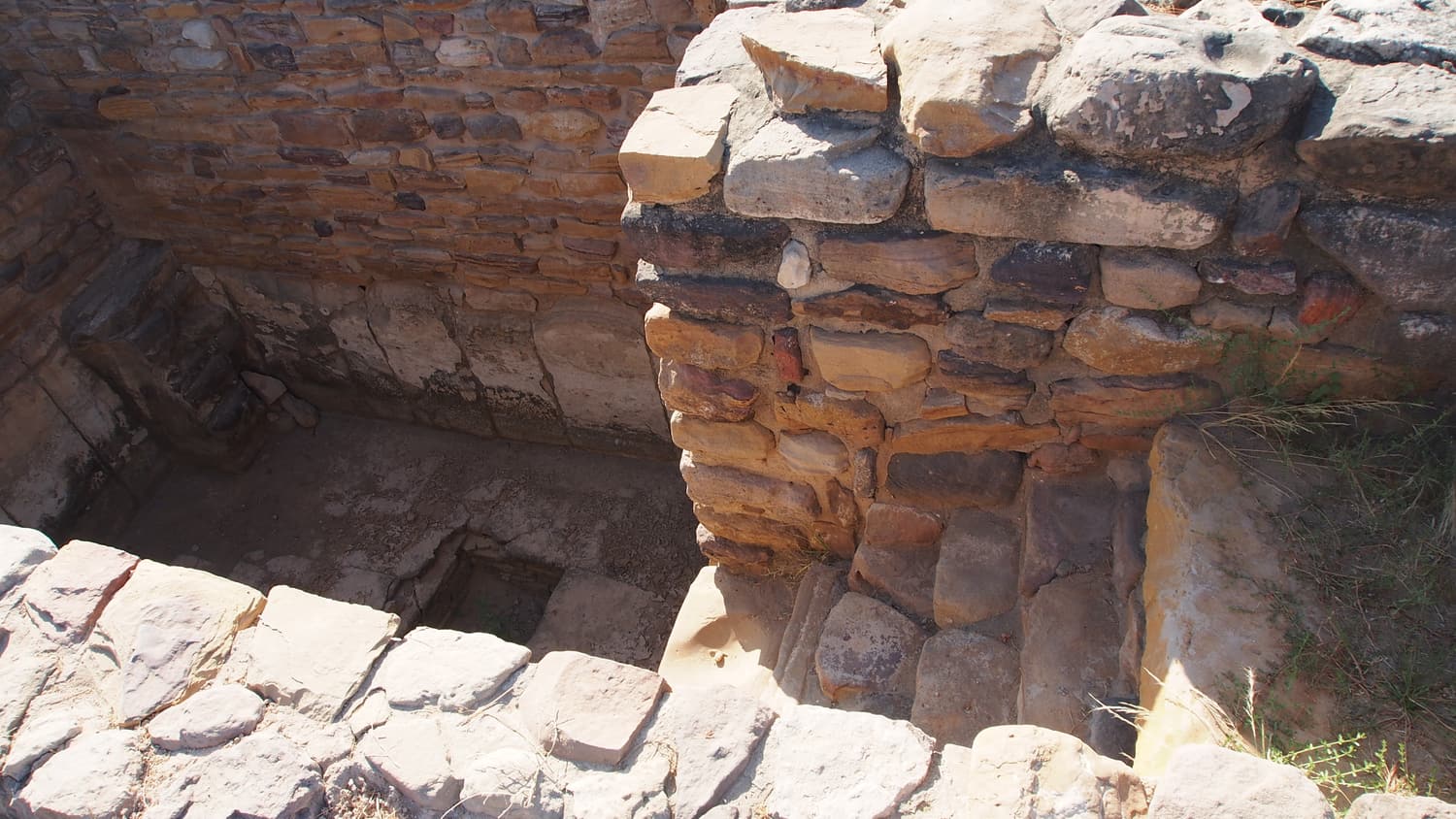
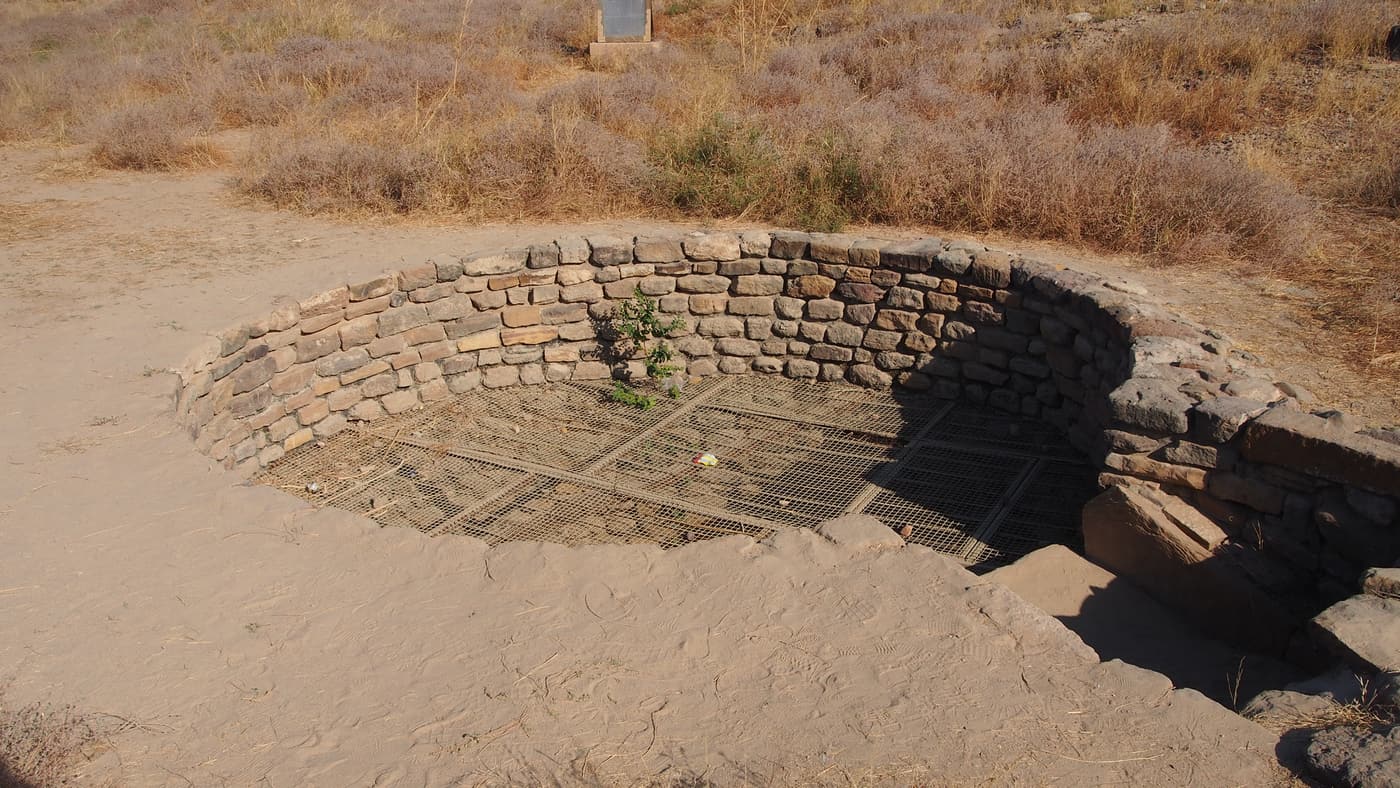
Inside the castle is one of the largest wells found at any Harappan site, with a stone trough beside it, and a series of tanks linked by channels. Some archaeologists read part of this as a bathing complex. Either way it shows how much effort went into water at the very top of the city.
Trace the storm drains
Stone-lined drains, some tall enough to crouch in, run beneath the citadel. They carried rainwater rather than sewage — the air ducts cut at intervals were to stop them bursting in a downpour — and delivered it to the reservoirs.
Take in the view
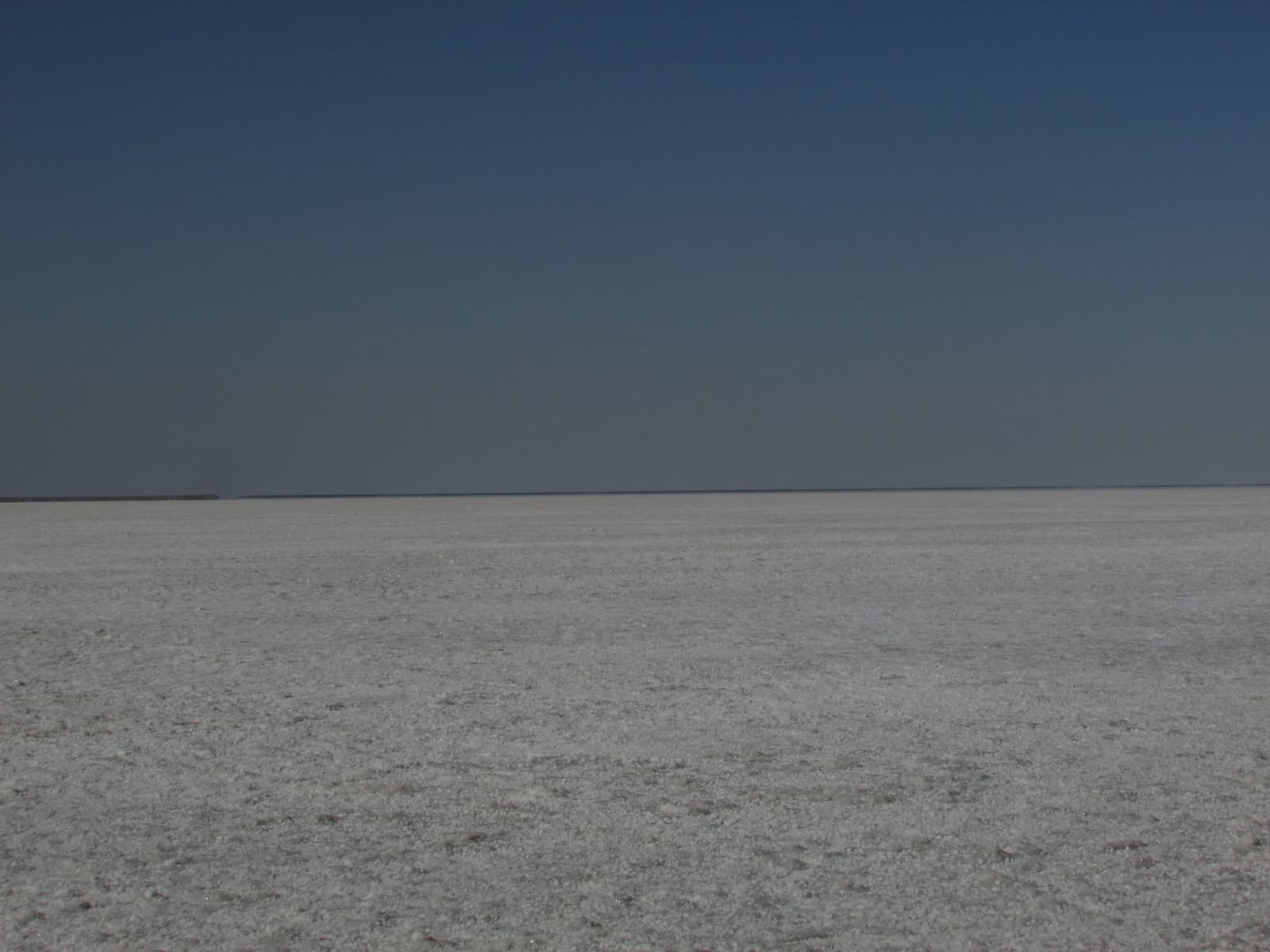
From the top of the castle you can read the whole plan: the ceremonial ground immediately to the north, the middle and lower towns beyond it, the line of reservoirs to the east and south, and the flat shimmer of the Rann on the horizon.
How to get to The Citadel
- The citadel is a short, gentle walk from the site entrance and the museum; follow the marked path, which reaches the eastern reservoir first and then climbs to the East Gate. Allow an hour here, more if you like to photograph stonework.
- For the journey to Dholavira itself — from Bhuj by the Road to Heaven, or from Ahmedabad via Rapar — see our getting here page.
Practical tips
- Go early or late. There is almost no shade on the mound and the stone throws back the heat; from March to June the middle of the day is punishing.
- Local guides wait near the entrance and are worth hiring: the site is poorly signed, and a good guide will show you details — mason’s marks, pillar sockets, drain junctions — you would otherwise walk past. Agree the fee first.
- Stay on the paths and off the walls. The stonework looks solid but the mud-brick cores are fragile, and climbing on structures is not allowed.
- Carry water, a hat and proper shoes. The ground is uneven and thorny in places.
Best tours for The Citadel
Bookable tours that include The Citadel or the country around it — check each itinerary before you book:
 Private multi-day tour from US$843
Ahmedabad: Dholavira & White Desert 3-Day Private Tour
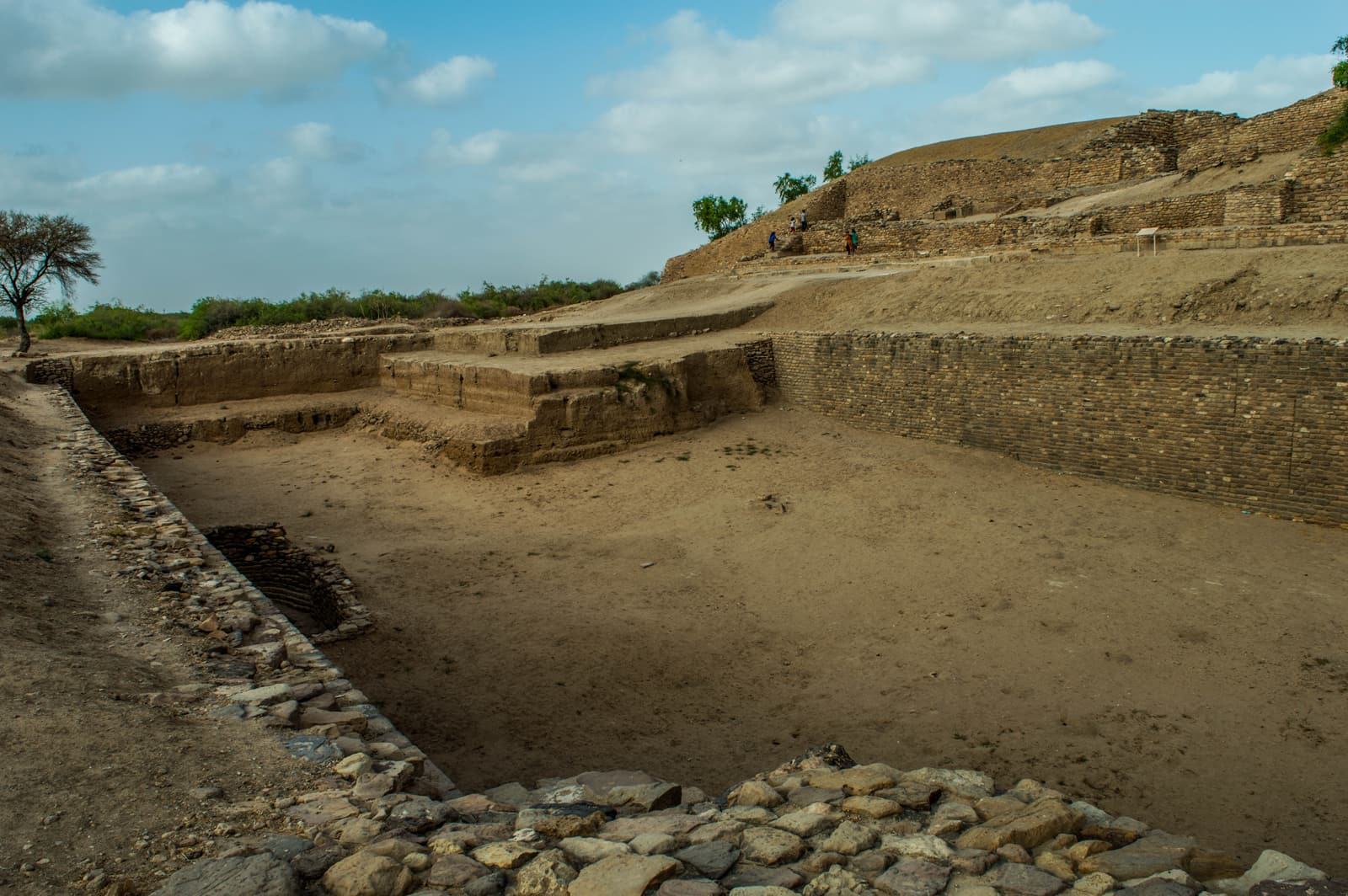
The only tour we found on GetYourGuide that actually goes to Dholavira. It is a private three-day loop by car from Ahmedabad: a jeep safari in the Little Rann of Kutch for wild ass and flamingos, the ruins of Dholavira and an evening on the salt flats next to the island, then the stepwell of Rani ki Vav and the Sun Temple at Modhera on the way back. Two hotel nights with breakfast, the guide and the safari are listed as included; entrance fees and other meals are not. It is a new listing without reviews, and it is a lot of road for three days — but as a single booking that solves the transport problem, nothing else comes close.
- A guided visit to the Harappan city of Dholavira
- Sunset on the white Rann beside Khadir Bet
- Little Rann jeep safari, Rani ki Vav and Modhera on the way
 Private multi-day tour from US$481
From Bhuj: 3-Day White Rann of Kutch Desert Tour
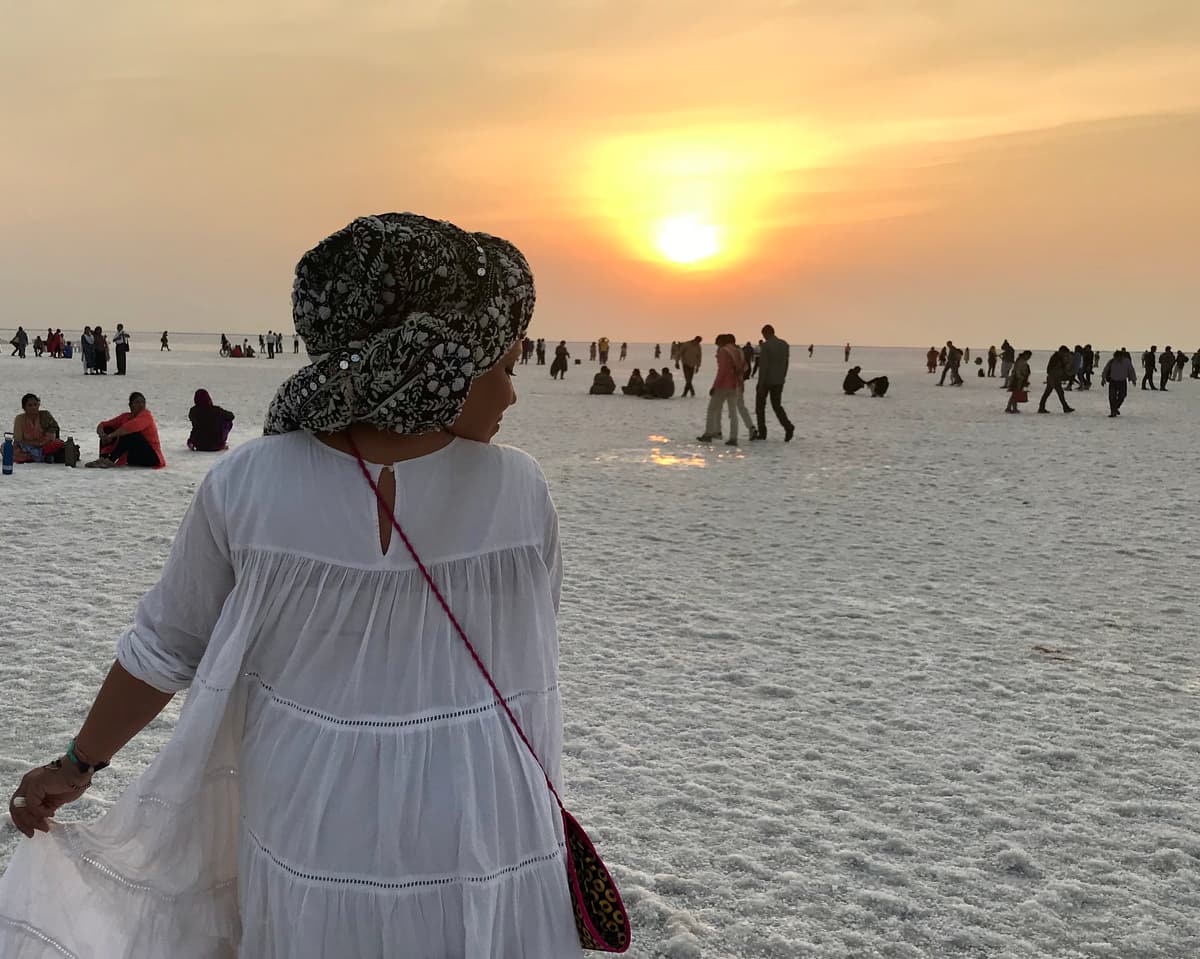
The most thorough of the Bhuj-based tours for the Dhordo side of the Rann. It strings together Rogan art at Nirona, the salt desert at sunset and again at sunrise, the bhungas of Dhordo, Khavda’s potters and the view from Kalo Dungar, sleeping two nights at a village resort in Hodka rather than driving back to Bhuj. Rann permit fees are payable directly. It does not include Dholavira — but it ends at Khavda’s doorstep, so ask the operator about adding the Road to Heaven and Dholavira as an extra day.
- Sunrise and sunset on the White Rann
- Nirona, Dhordo, Khavda and Hodka village visits
- Kalo Dungar viewpoint; two nights at a village resort in Hodka
 Private multi-day tour from US$889
6-Day Kutch Tour with White Desert and Heritage Sites
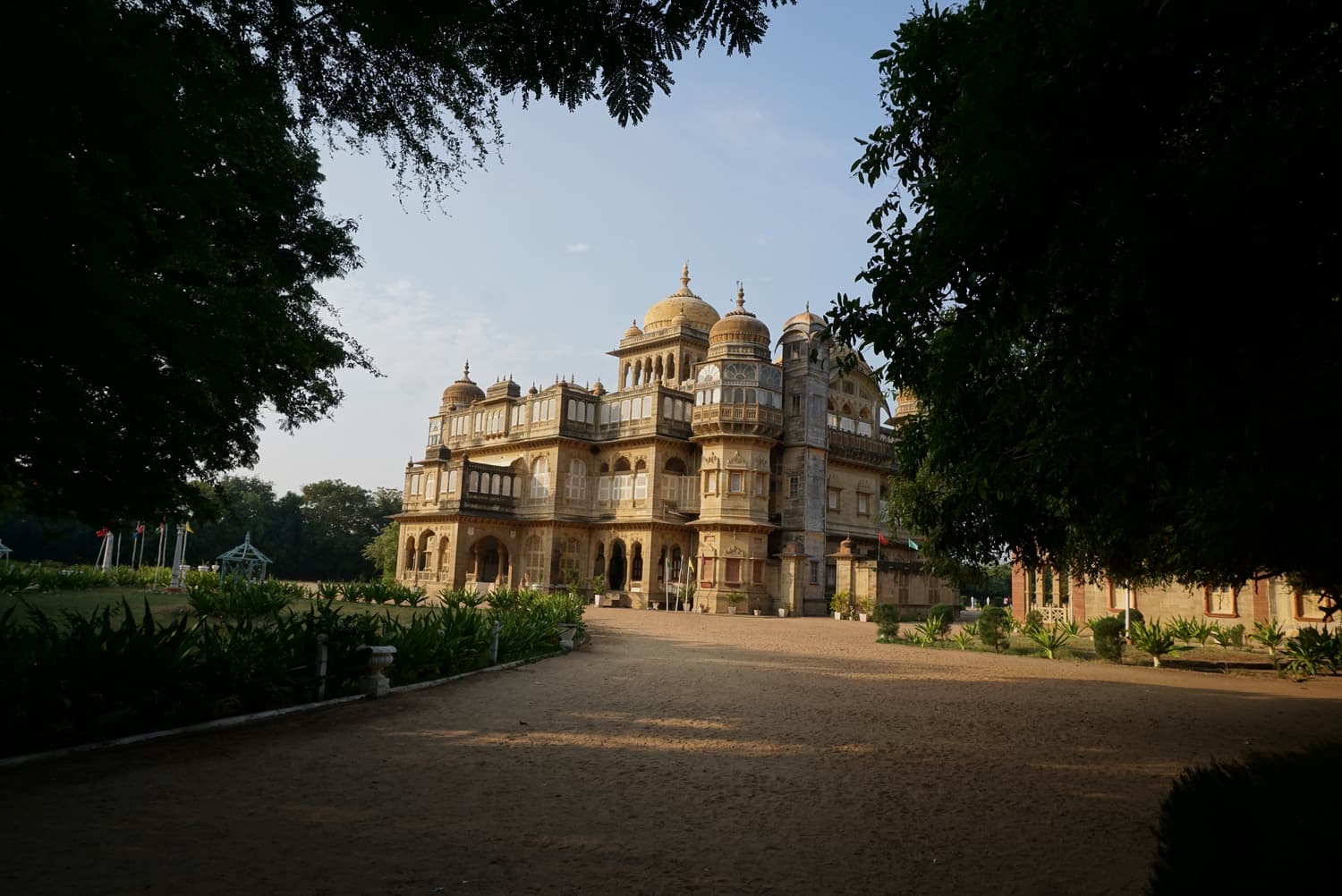
The widest Kutch itinerary on GetYourGuide: Ahmedabad, Patan and Modhera, a night at Bajana on the Little Rann, three nights in Bhuj with a day at Mandvi and a long day to the villages, Kalo Dungar and the White Rann, then the eight-hour drive back. Three-star hotels and breakfast are listed as included. It still omits Dholavira — the one obvious gap — so if the ruins are your reason for coming, ask whether a day can be swapped. No reviews yet.
- Rani ki Vav, Modhera and the Little Rann on the way west
- Bhuj, Bhujodi, Mandvi beach and Vijay Vilas Palace
- White Rann, Hodka, Ludiya, Dhordo and Kalo Dungar