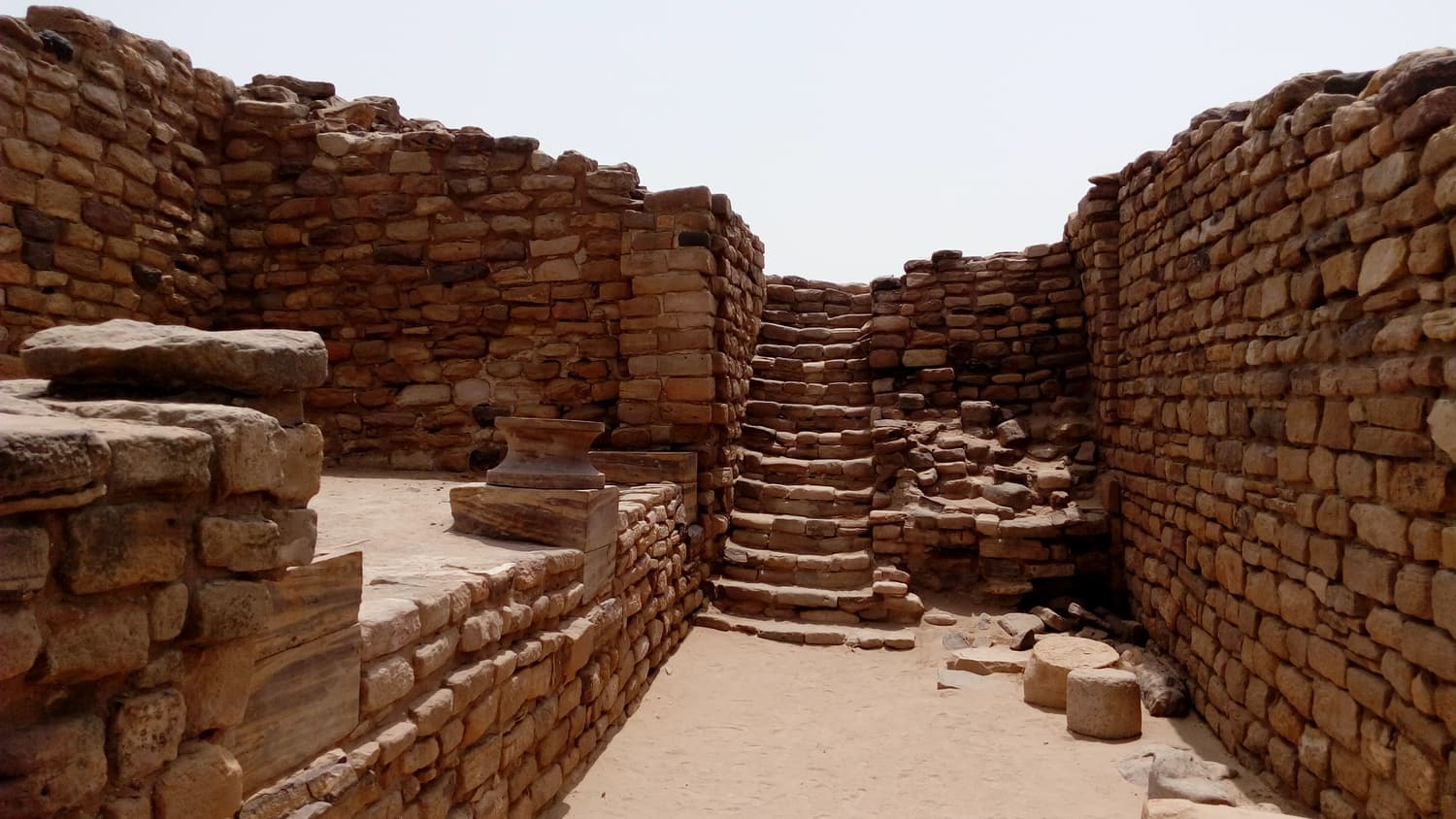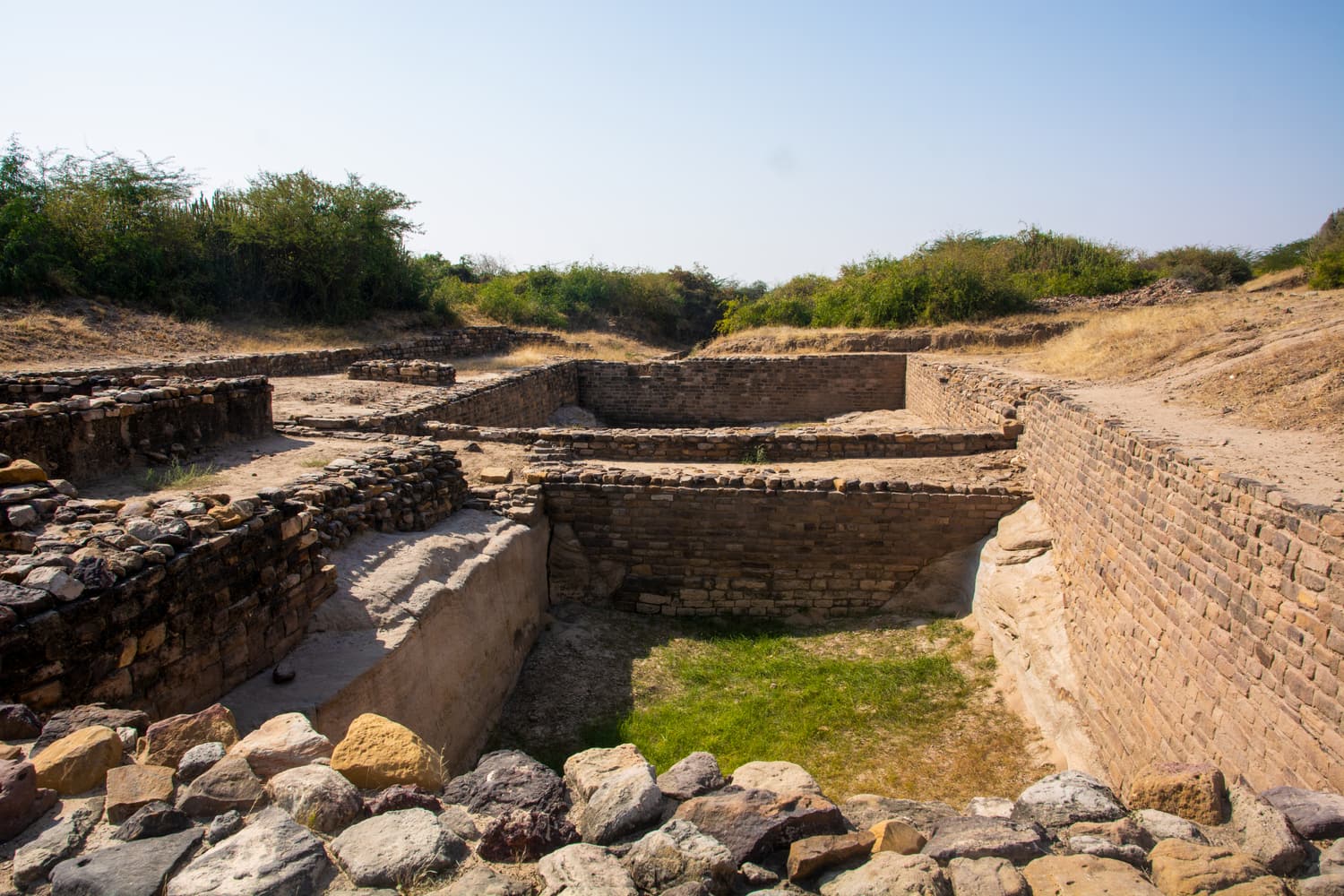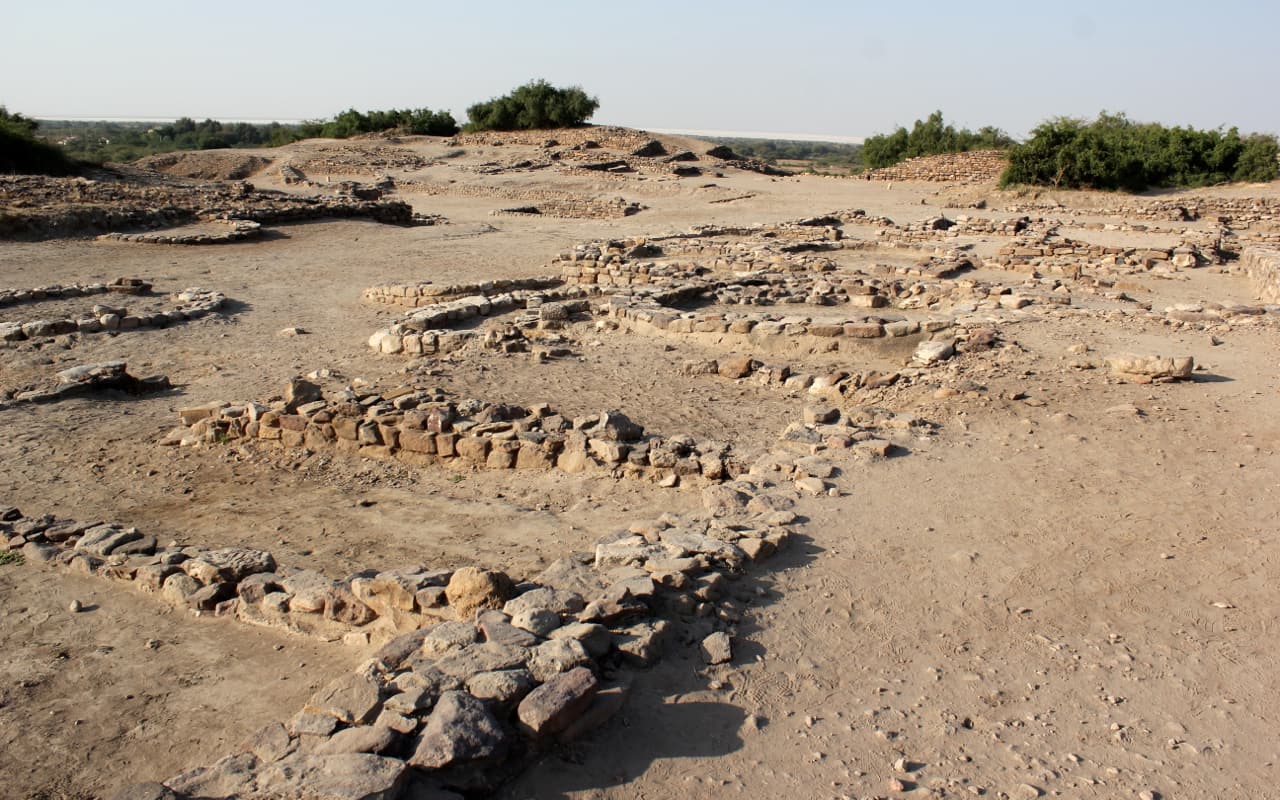
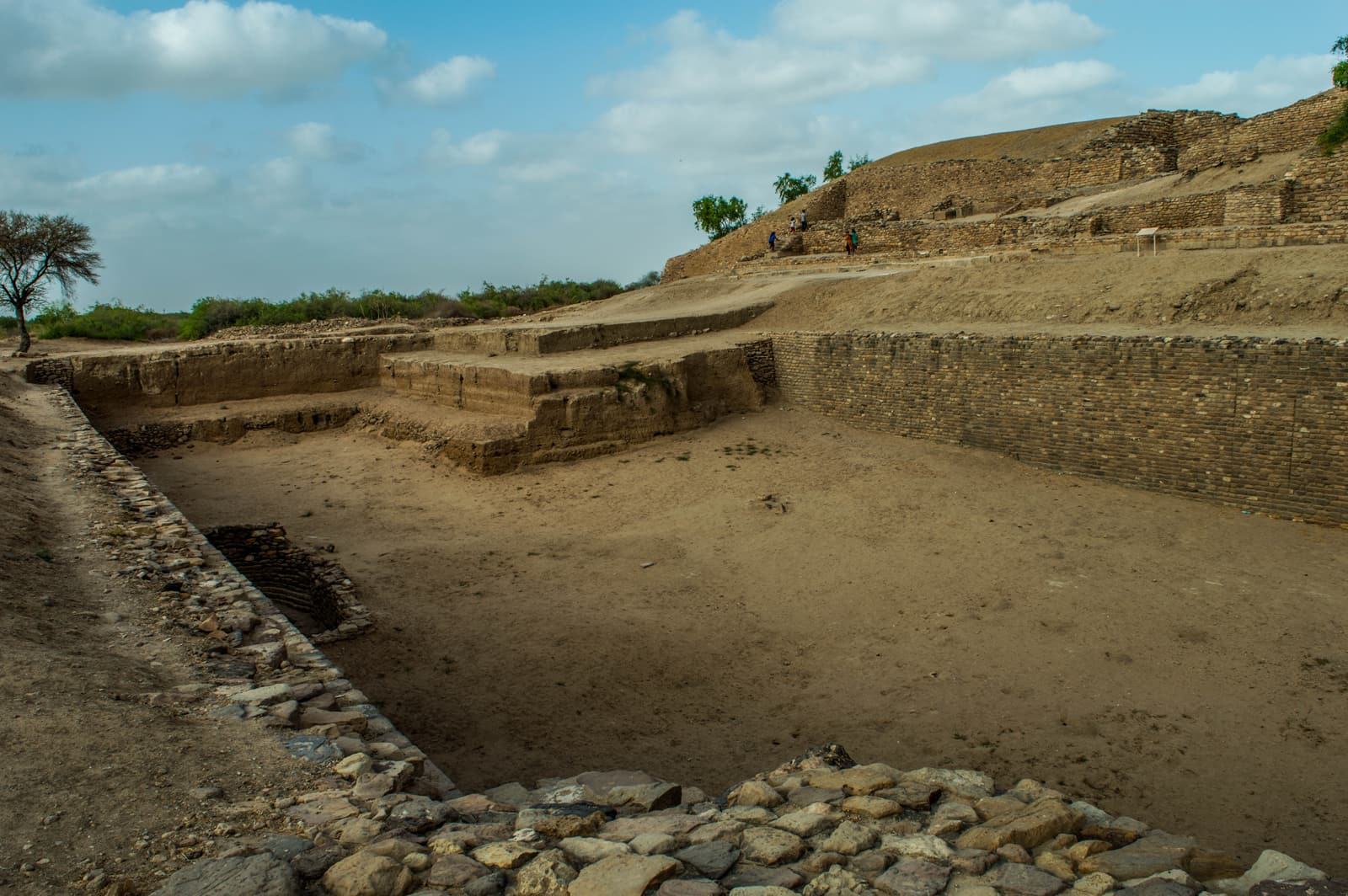
A citadel needs a city. North of the ceremonial ground lies Dholavira’s middle town, a walled residential quarter with a broad main street and lanes crossing it at right angles; to its east is the lower town, where more modest houses and craft workshops spread out inside the outer city wall. This three-part plan — citadel, middle town, lower town — is unusual: most Harappan cities had two parts.
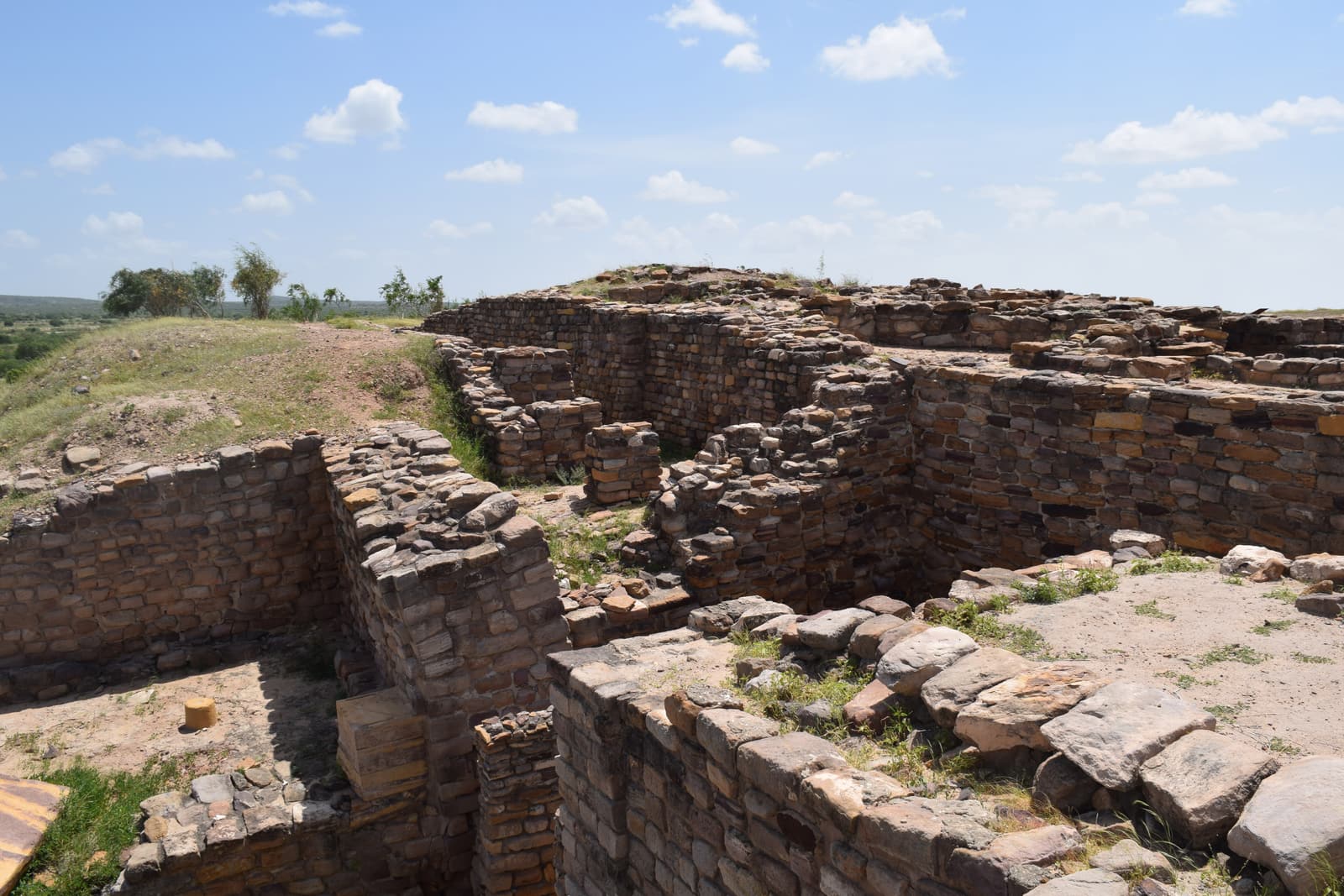
The whole was enclosed by an outer fortification roughly 770 m by 620 m, laid out with a regularity that implies surveyors working to a fixed set of proportions. Houses were built of stone and mud brick around courtyards, with drains, soak jars and storage. In the workshops excavators found the debris of bead-making in agate and carnelian, shell-working, pottery and metalwork — the goods that Dholavira sent out along the trade routes of the Bronze Age.
West of the city is the cemetery. Most of its graves turned out to contain no skeleton at all: they seem to be memorials to people who died elsewhere. There are also several hemispherical mounds built of stone and mud brick, one of them laid out like a spoked wheel, which are among the strangest structures the Harappans left.
What to see and do at Middle & Lower Town
Follow a Harappan street
Walk the main street of the middle town and notice how the side lanes meet it squarely and how house walls keep to a common line. This is town planning, done before 2000 BCE.
Look for the round houses
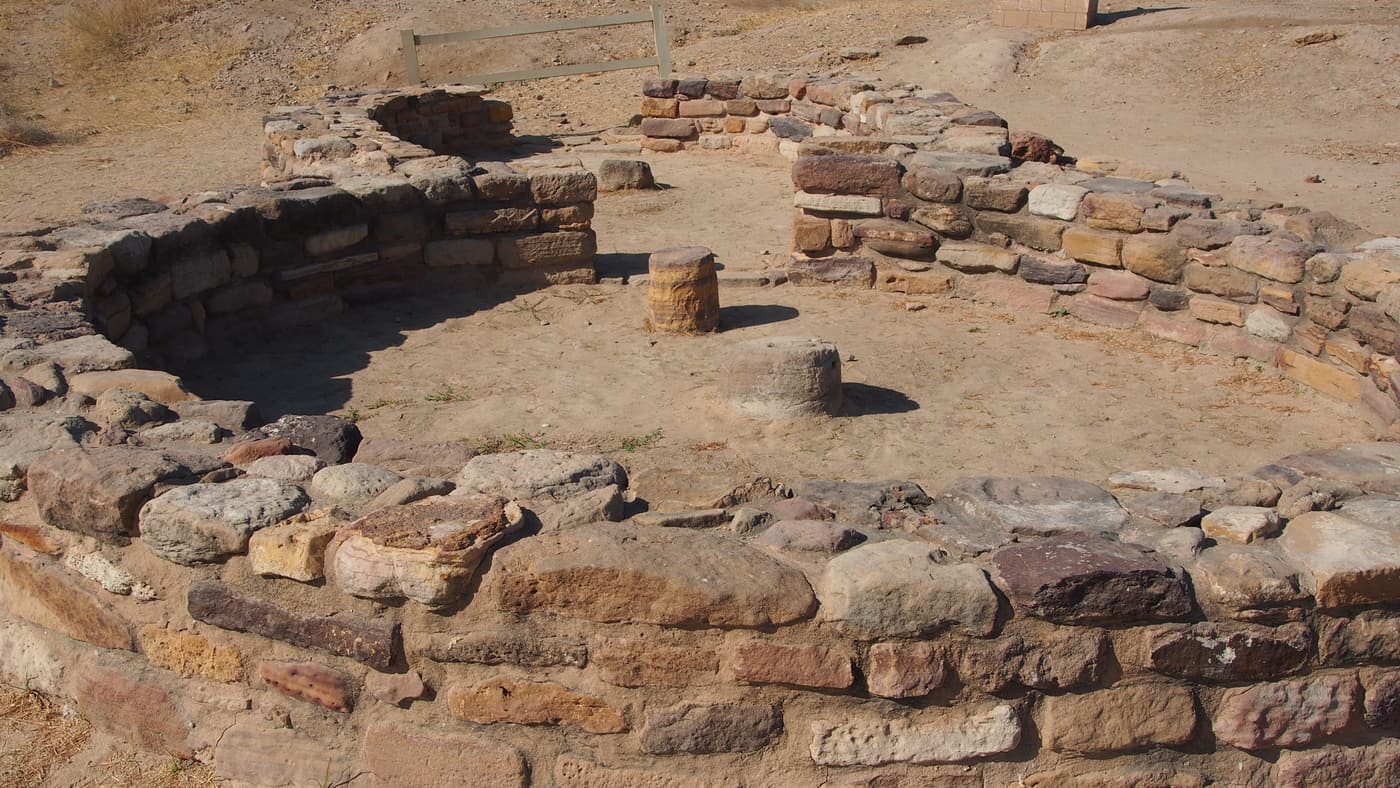
In the last phase of the city, after it had declined and been partly abandoned, newcomers built circular huts on the ruins. Their stone footings look strikingly like the base of a modern Kutchi bhunga.
Imagine the workshops
In the lower town, think beads. Dholavira’s craftsmen drilled long carnelian beads with stone bits and worked shell from the Gulf of Kutch into bangles. Examples are in the museum.
Ask about the cemetery
The tumuli and memorial graves lie outside the main visitor circuit to the west. Access varies; ask at the entrance or ask your guide whether it is possible to see them.
How to get to Middle & Lower Town
- From the North Gate, cross the ceremonial ground to reach the middle town; the lower town lies further east. Paths are less formal here than on the citadel, so wear closed shoes.
- See getting to Dholavira for transport.
Practical tips
- Much of the town is low wall-footings rather than standing buildings. It rewards imagination and a guide more than a hurried walk.
- This is the hottest, most exposed part of the visit. Do it first on a warm day, not last.
- Do not pick up potsherds or beads. Removing anything from a protected site is an offence, and every piece taken is information lost.
- Thorn bushes grow among the ruins; watch your ankles and your tyres if you cycle here from the village.
Best tours for Middle & Lower Town
Bookable tours that include Middle & Lower Town or the country around it — check each itinerary before you book:
 Private multi-day tour from US$843
Ahmedabad: Dholavira & White Desert 3-Day Private Tour
The only tour we found on GetYourGuide that actually goes to Dholavira. It is a private three-day loop by car from Ahmedabad: a jeep safari in the Little Rann of Kutch for wild ass and flamingos, the ruins of Dholavira and an evening on the salt flats next to the island, then the stepwell of Rani ki Vav and the Sun Temple at Modhera on the way back. Two hotel nights with breakfast, the guide and the safari are listed as included; entrance fees and other meals are not. It is a new listing without reviews, and it is a lot of road for three days — but as a single booking that solves the transport problem, nothing else comes close.
- A guided visit to the Harappan city of Dholavira
- Sunset on the white Rann beside Khadir Bet
- Little Rann jeep safari, Rani ki Vav and Modhera on the way
 Private multi-day tour from US$889
6-Day Kutch Tour with White Desert and Heritage Sites
The widest Kutch itinerary on GetYourGuide: Ahmedabad, Patan and Modhera, a night at Bajana on the Little Rann, three nights in Bhuj with a day at Mandvi and a long day to the villages, Kalo Dungar and the White Rann, then the eight-hour drive back. Three-star hotels and breakfast are listed as included. It still omits Dholavira — the one obvious gap — so if the ruins are your reason for coming, ask whether a day can be swapped. No reviews yet.
- Rani ki Vav, Modhera and the Little Rann on the way west
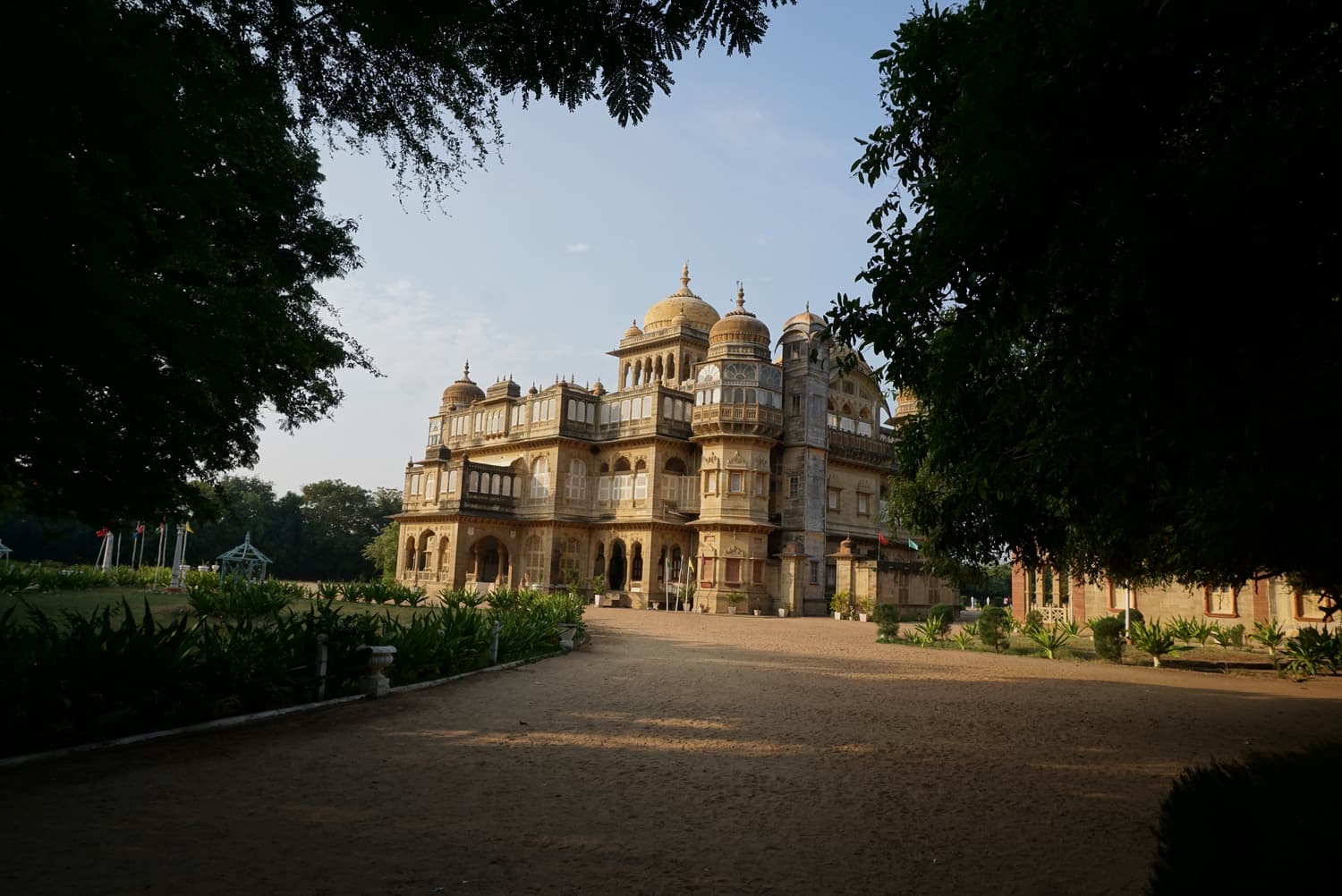
- Bhuj, Bhujodi, Mandvi beach and Vijay Vilas Palace
- White Rann, Hodka, Ludiya, Dhordo and Kalo Dungar
 Private multi-day tour from US$481
From Bhuj: 3-Day White Rann of Kutch Desert Tour
The most thorough of the Bhuj-based tours for the Dhordo side of the Rann. It strings together Rogan art at Nirona, the salt desert at sunset and again at sunrise, the bhungas of Dhordo, Khavda’s potters and the view from Kalo Dungar, sleeping two nights at a village resort in Hodka rather than driving back to Bhuj. Rann permit fees are payable directly. It does not include Dholavira — but it ends at Khavda’s doorstep, so ask the operator about adding the Road to Heaven and Dholavira as an extra day.
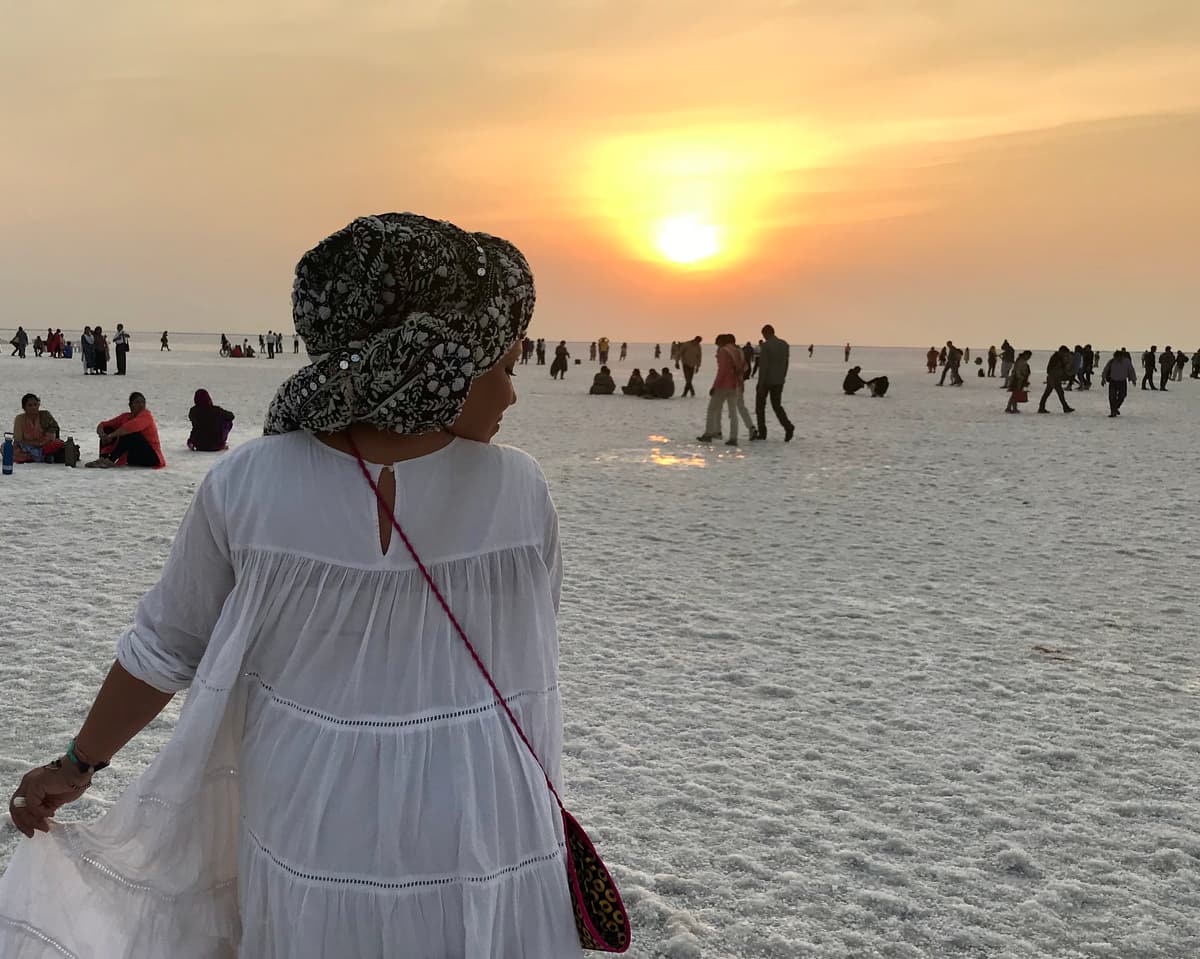
- Sunrise and sunset on the White Rann
- Nirona, Dhordo, Khavda and Hodka village visits
- Kalo Dungar viewpoint; two nights at a village resort in Hodka