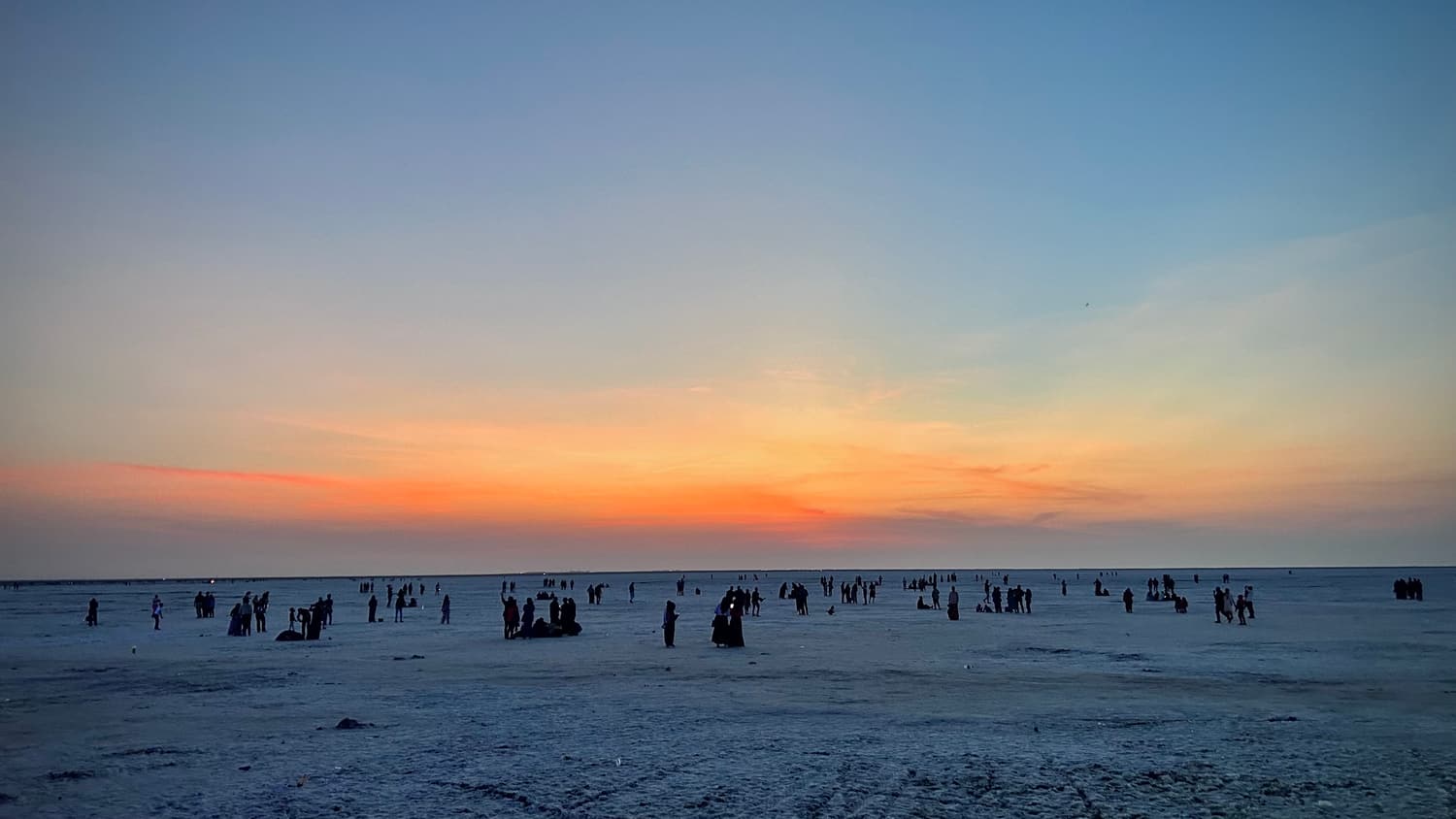
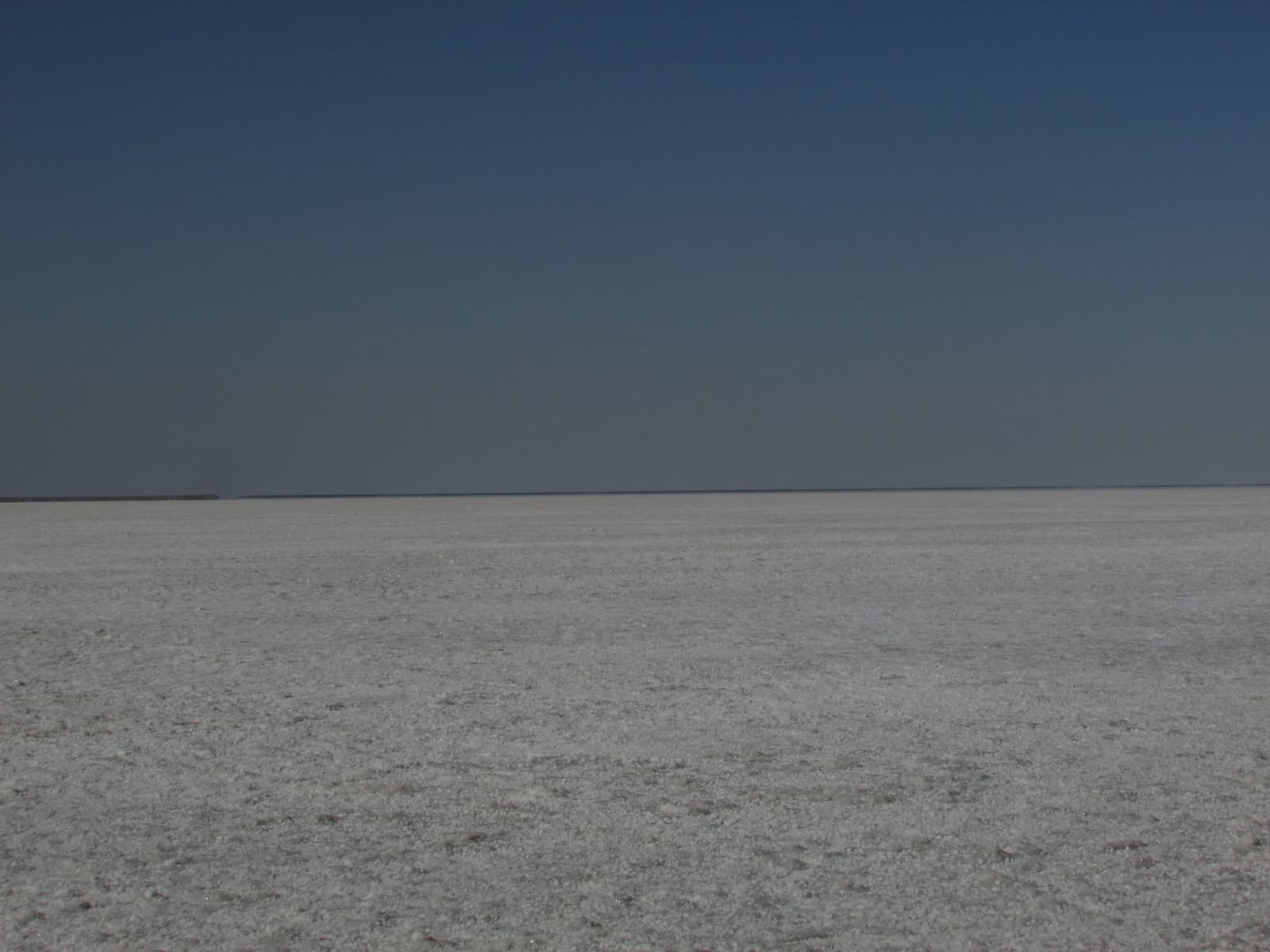
The Great Rann of Kutch is a salt marsh the size of a small country, flooded by the monsoon and by seawater each summer and baked dry each winter. As the water evaporates it leaves a crust of salt that, by December, lies white and level to the horizon. The easiest place to walk out onto it is at Dhordo, a village at the end of the road about 80 km north of Bhuj, and this is what most people mean when they talk about the White Rann or the White Desert.
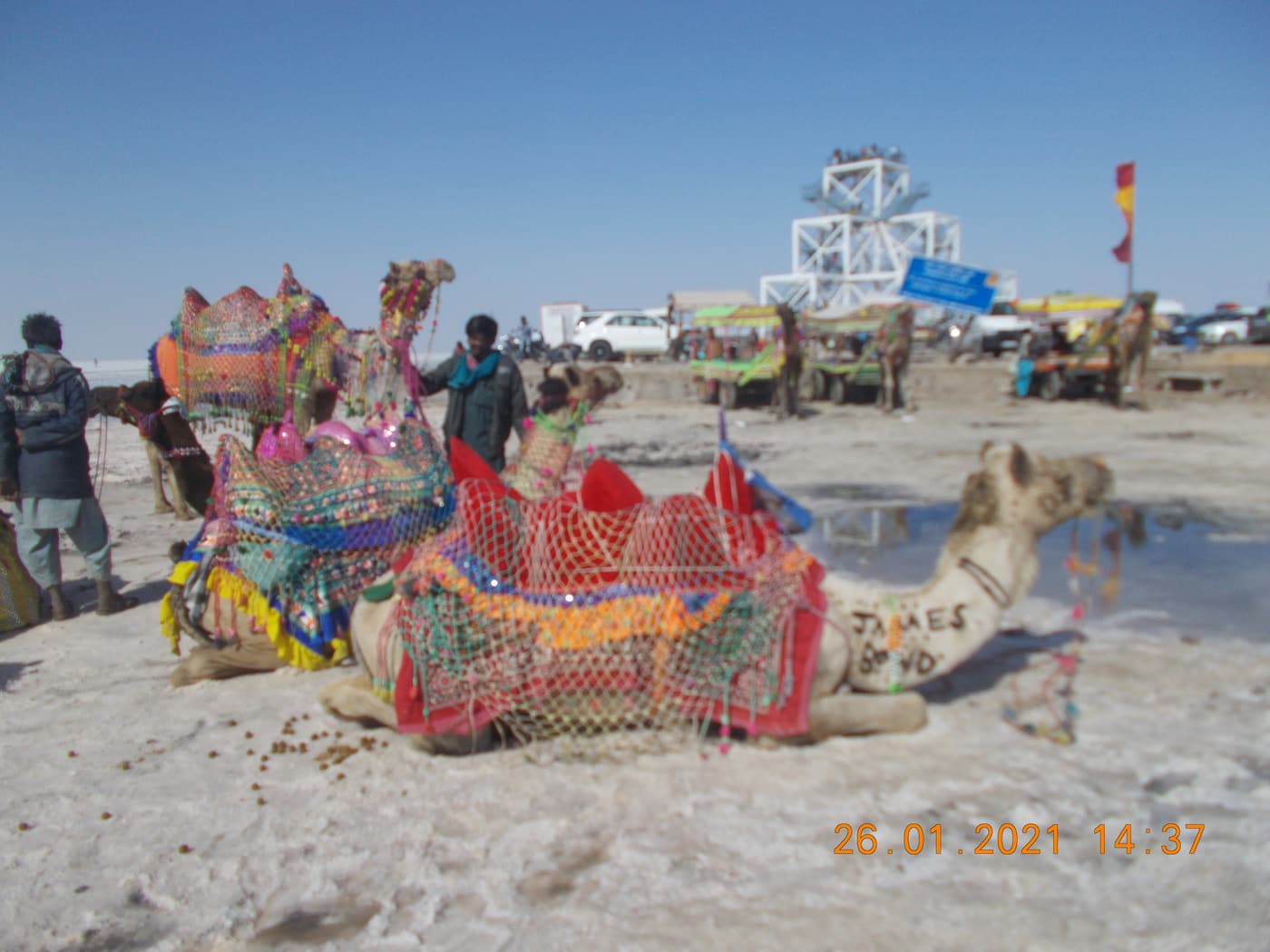
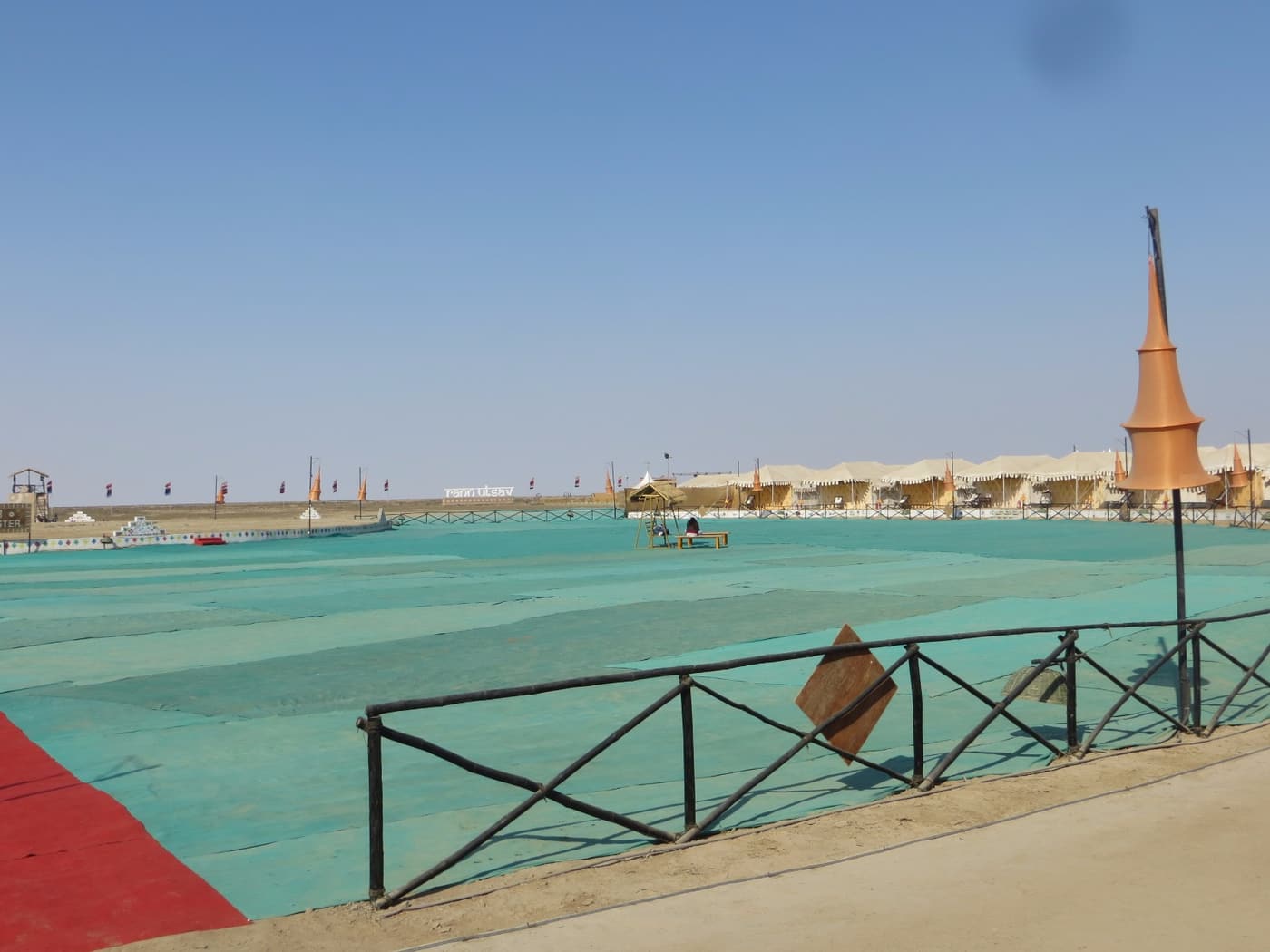
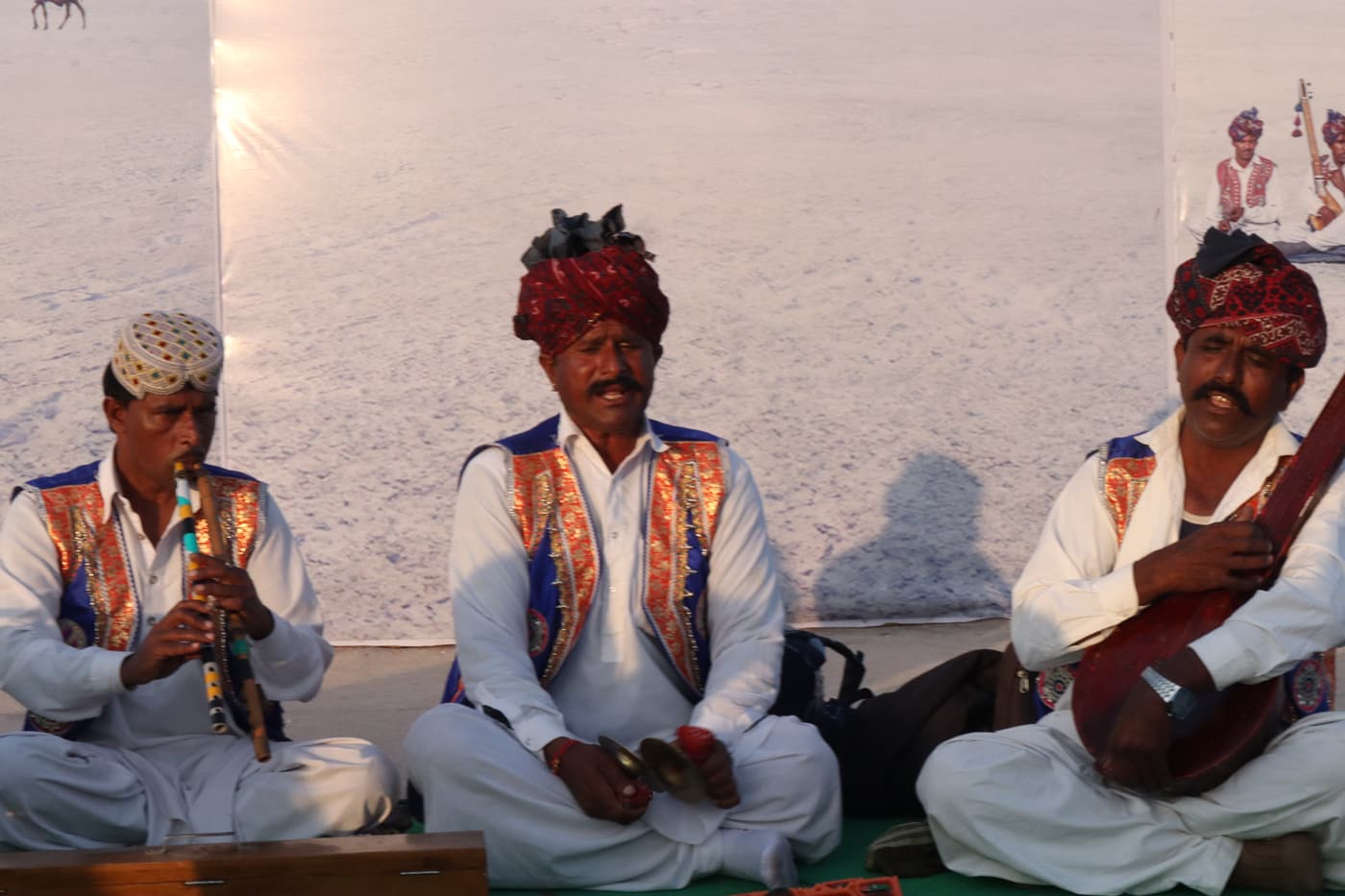
Dhordo is also the home of the Rann Utsav, the state-sponsored winter festival. For roughly three to four months — usually from around November to February, with the exact dates announced each year and sometimes extended — a large tent city goes up beside the village, with craft bazaars, food courts, folk music and dance, camel-cart rides and a viewing tower on the salt. The village was named one of the UN tourism agency’s Best Tourism Villages in 2023.
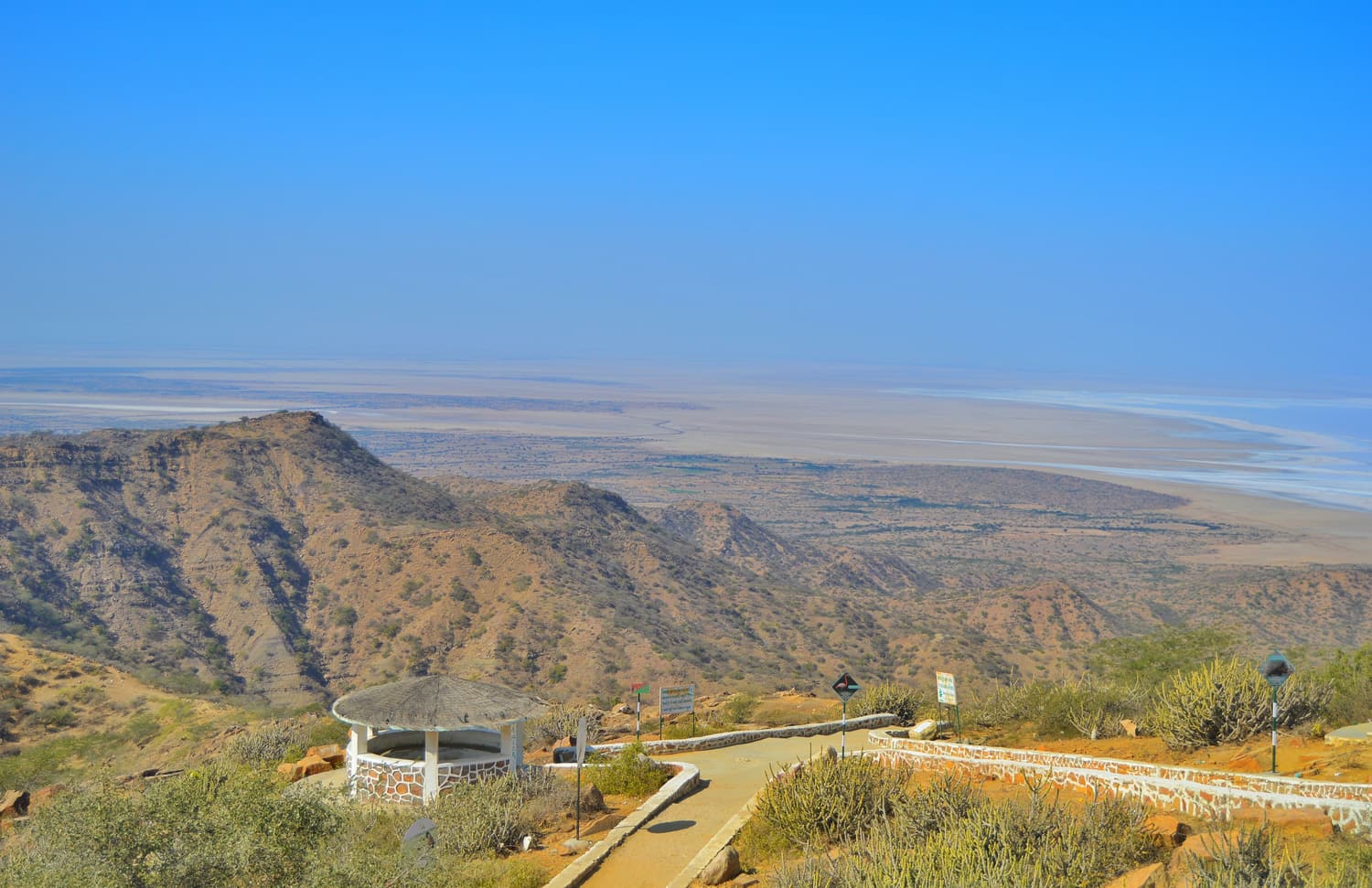
Dhordo and Dholavira sit on the same Rann but on different sides of it, and they offer different things: Dhordo the spectacle and the party, Dholavira the silence and the ruins. Since the Road to Heaven opened, it is practical to see both on one trip, with Kalo Dungar between them.
What to see and do at White Rann & Dhordo
Walk out onto the salt
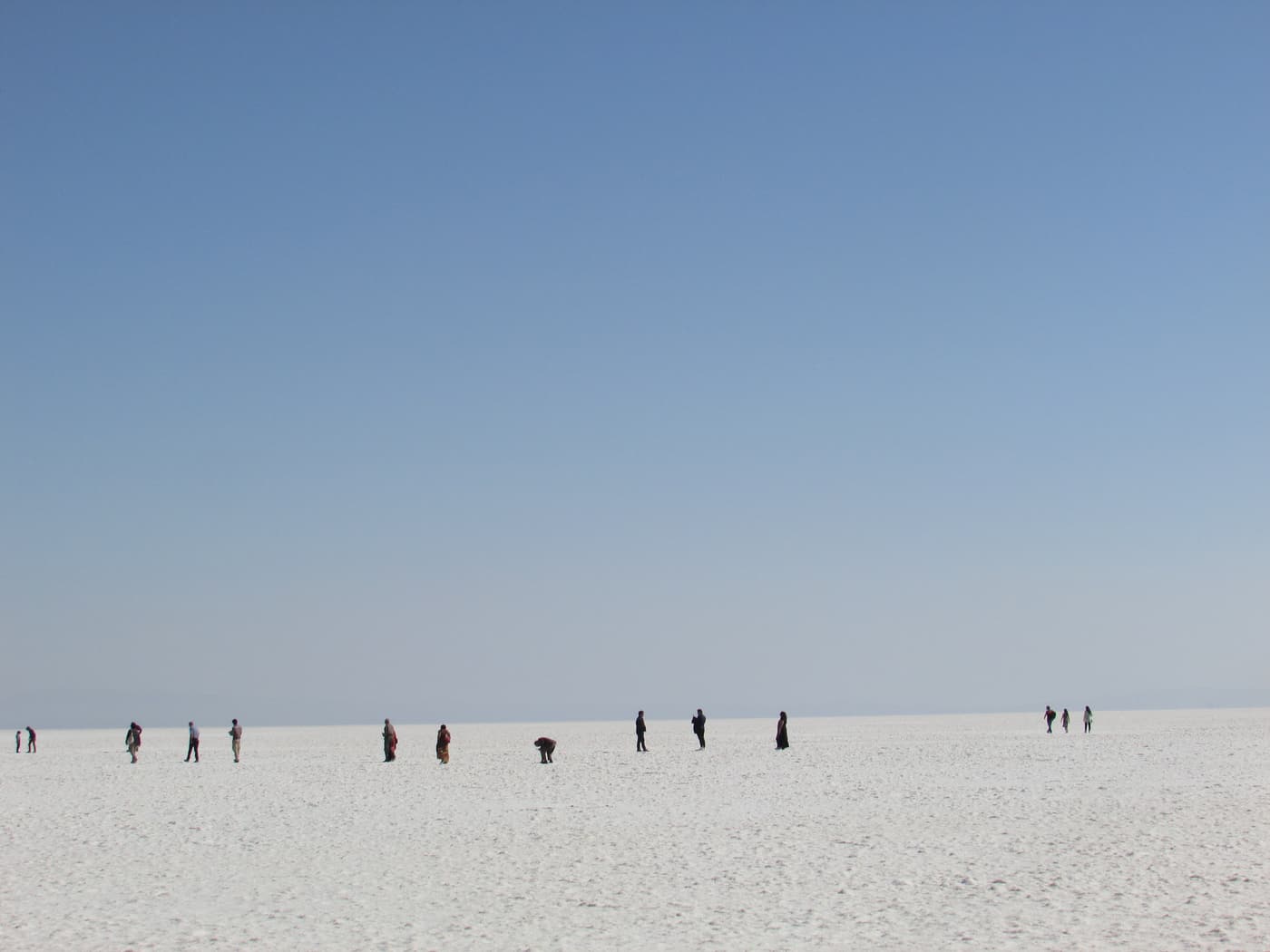
From the car park a paved path and camel carts lead to the edge; beyond the tower you are free to walk. Go far enough to lose the crowd and the scale of the place takes over.
Be there for sunset — and moonrise
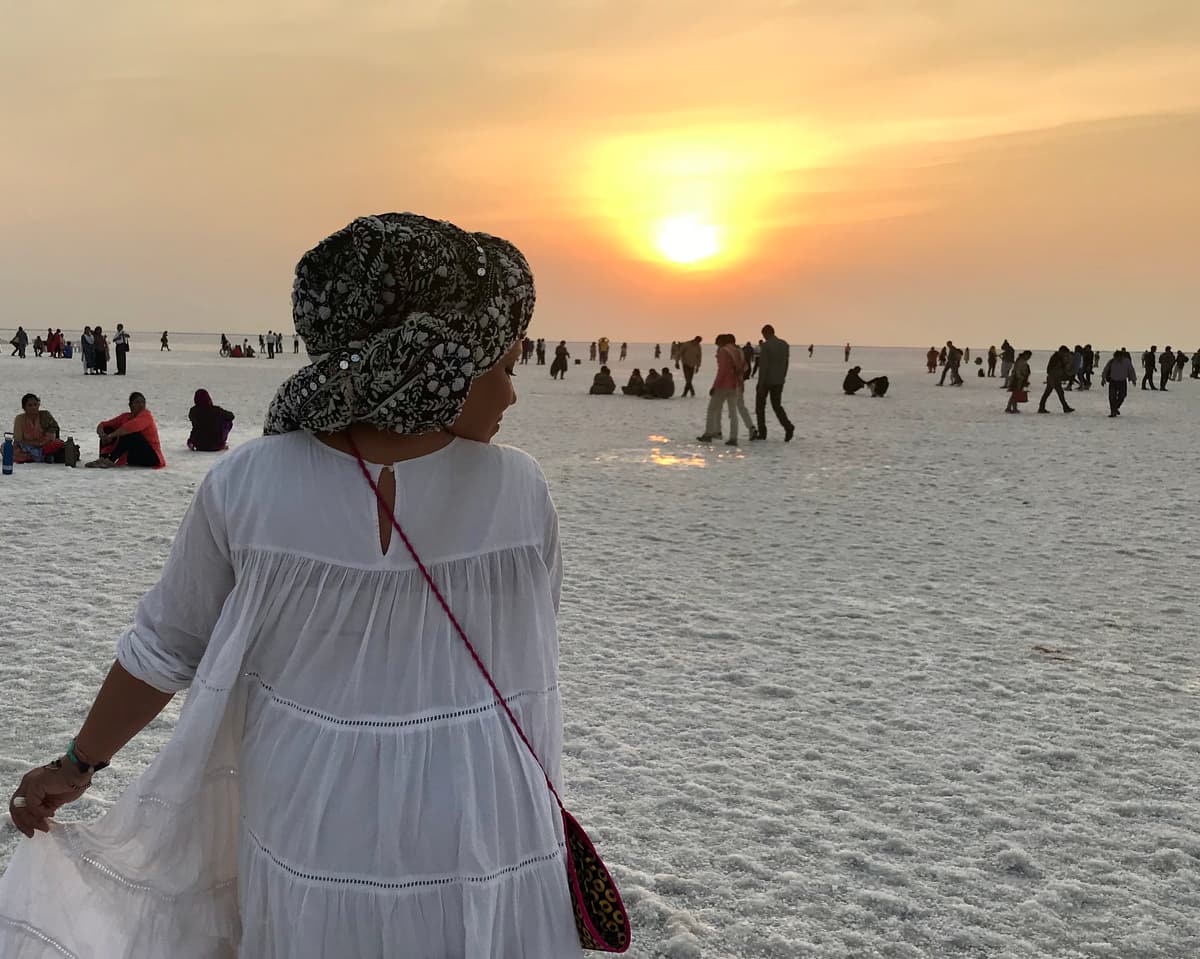
Sunset is the busy hour. On nights around the full moon the salt reflects the moonlight and people stay late; those dates sell out first in the tent city.
Go at sunrise
Fewer people make the effort, the air is cold and clear, and the low light brings out the texture of the crust.
Browse the Rann Utsav
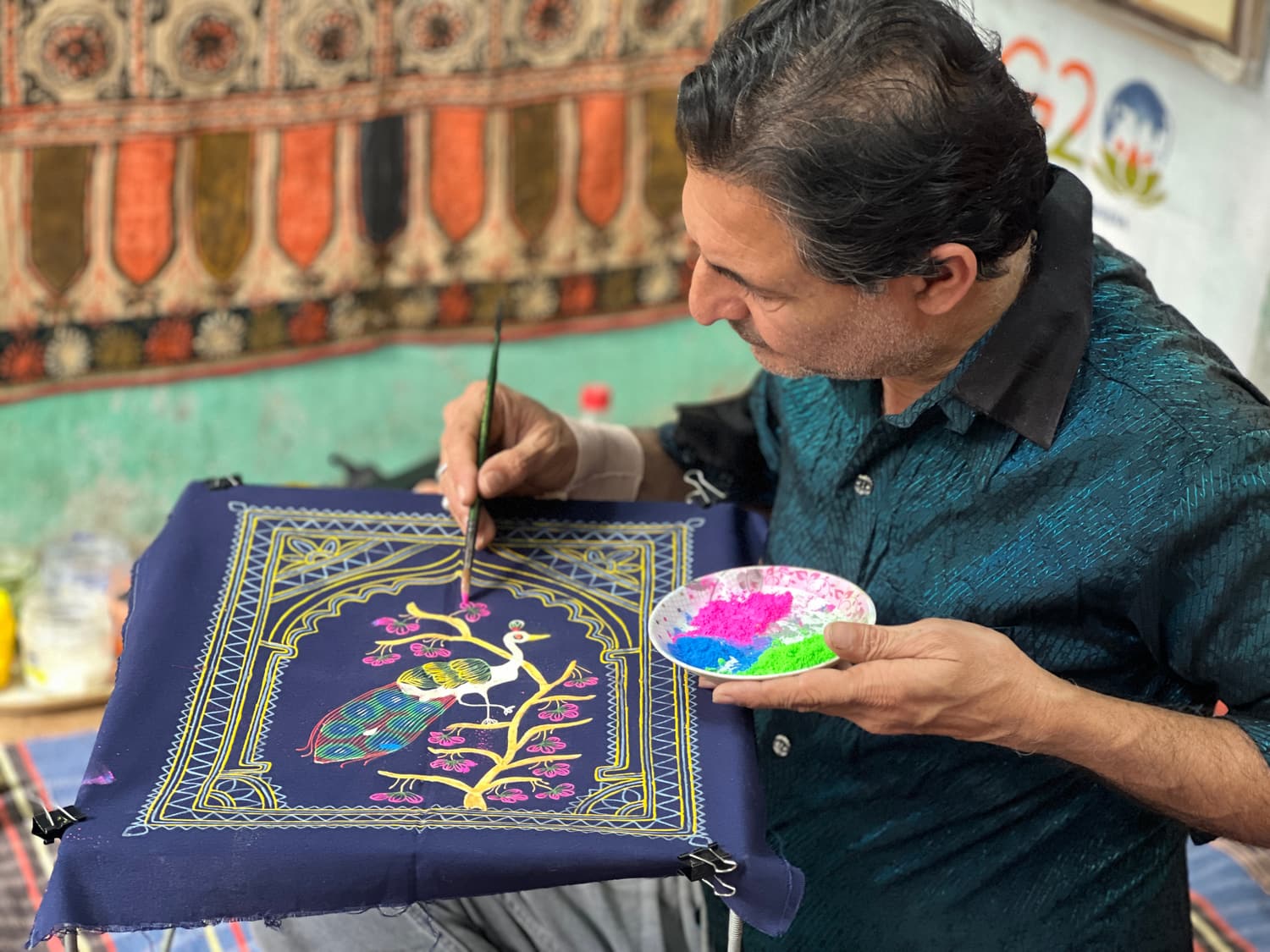
In season the craft bazaar brings together work from across Kutch — embroidery, Ajrakh, bandhani, leather, lacquer, Rogan — with the makers present. Prices are fair but not rock-bottom.
Visit the Banni villages on the way
Hodka, Ludiya and Bhirandiyara lie on or near the road from Bhuj. See our craft villages page.
How to get to White Rann & Dhordo
- From Bhuj, drive north on the Khavda road to Bhirandiyara (about 55 km), where the Dhordo road turns off to the west; Dhordo is around 30 km further. Allow a little under two hours. Buses run from Bhuj in the festival season, but a car gives you the freedom to stay for sunset.
- A permit is required for the White Rann. It is issued for a small per-person and per-vehicle fee at the Bhirandiyara check-post, and there has been an online option; carry photo identity for everyone and a copy of the vehicle papers. From Dhordo to Dholavira via Khavda and the Road to Heaven is roughly 130 km, about three hours.
Practical tips
- Do not book the tent city, or any Rann Utsav package, on a website you have not verified. Look-alike booking sites exist. This site sells no tent bookings or permits.
- Outside the festival months there is still salt to see until about March, without the tents, crowds or prices — but with far fewer facilities.
- It is cold after dark from December to February. Bring a proper jacket.
- The salt is hard on shoes and cameras. Rinse both afterwards.
- The Rann beyond the tourist area is a sensitive border zone. Do not try to drive across it.
Best tours for White Rann & Dhordo
Bookable tours that include White Rann & Dhordo or the country around it — check each itinerary before you book:
Private multi-day tour from US$481 From Bhuj: 3-Day White Rann of Kutch Desert Tour
The most thorough of the Bhuj-based tours for the Dhordo side of the Rann. It strings together Rogan art at Nirona, the salt desert at sunset and again at sunrise, the bhungas of Dhordo, Khavda’s potters and the view from Kalo Dungar, sleeping two nights at a village resort in Hodka rather than driving back to Bhuj. Rann permit fees are payable directly. It does not include Dholavira — but it ends at Khavda’s doorstep, so ask the operator about adding the Road to Heaven and Dholavira as an extra day.
- Sunrise and sunset on the White Rann
- Nirona, Dhordo, Khavda and Hodka village visits
- Kalo Dungar viewpoint; two nights at a village resort in Hodka
Private multi-day tour from US$352 From Bhuj: 3-Day Kutch Tour with White Rann & Villages
A gentler, cheaper version of the tour above that stays both nights in Bhuj. Day one is the old palaces and Bhujodi; day two is the roughly 80 km run out to the White Rann with Hodka and Dhordo and a sunset on the salt; day three is simply the airport transfer. It is in effect two days of sightseeing, and it does not go to Dholavira or Kalo Dungar. New listing, no reviews yet.
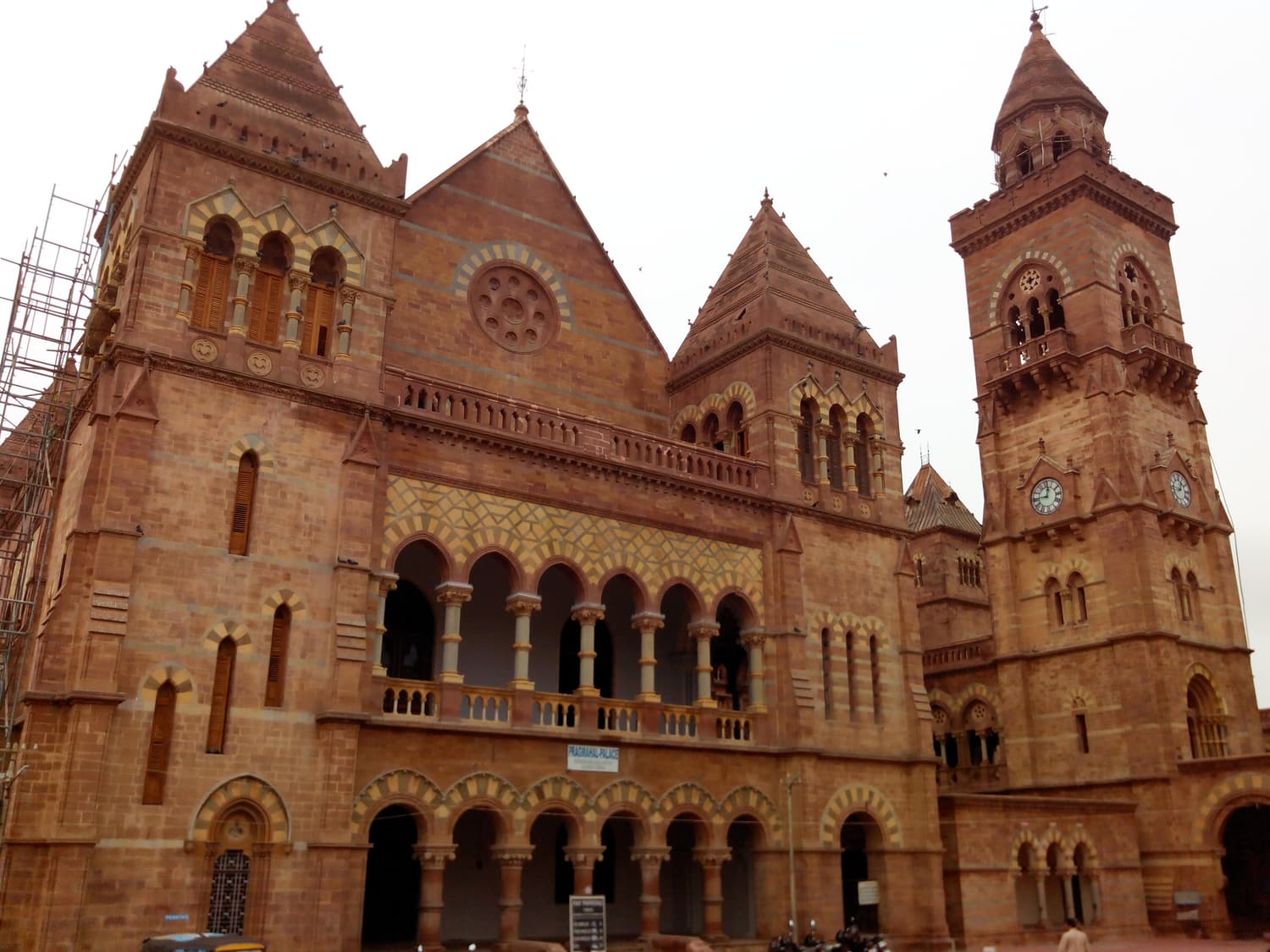
- Aina Mahal, Prag Mahal and the weavers of Bhujodi
- A day trip to the White Rann, Hodka and Dhordo
- Two hotel nights in Bhuj with breakfast and airport transfers
Private multi-day tour from US$737 Ahmedabad: Rann of Kutch 3-Day Private Tour with Guide
A private car and guide from Ahmedabad to Bhuj and on to the White Rann, with craft villages by day and a tented night at Dhordo with folk music. It is the one Kutch multi-day tour on the platform with a review — a single, five-star one — which is something, though not much. The Tent City operates only in the Rann Utsav season, so check what the stay becomes outside it. Dholavira is not on this itinerary.
- Bhuj’s Aina Mahal and Prag Mahal
- The Great Rann at sunrise and sunset
- Hodka, Dhordo and Nirona; a night in the Tent City
Private package with tent stay from US$722 Rann of Kutch: 2 or 3 Day White Desert & Cultural Experience
An all-in package built around a night in a “premium tent” near the White Rann: pickup, the Swaminarayan Temple and Kutch Museum in Bhuj, sunset on the salt, cultural programme and dinner, then sunrise and Kalo Dungar before the drive back. Having meals included is a real convenience out here. As a new listing without reviews, confirm exactly which camp is used on your dates.
- White Rann sunset and sunrise points
- Kalo Dungar, Bhuj’s Swaminarayan Temple and Kutch Museum
- Premium tent, all meals and a camel-cart ride listed as included